Hair Types 1A to 4C: What the Chart Measures, and the Four Things That Actually Decide Your Routine
Almost everyone arrives at hair typing the same way. You find a chart, you scroll until something looks like your head, you land on a number and a letter, and then you go looking for the rules that come with it.
Here is the thing worth knowing before you do that. The chart measures exactly one property of your hair: the shape it grows in. Not how much hair you have. Not how thick each strand is. Not what condition it is in. One property, and not the one that decides most of what you should be doing.
This guide covers all twelve types from 1A to 4C, explains where the system came from and what it genuinely does well, and then walks through the four variables that actually shape a routine. Straight hair is included properly here rather than as a footnote, because straight hair has a pattern too, and it has been left out of this conversation for far too long.
What Are the Hair Types?
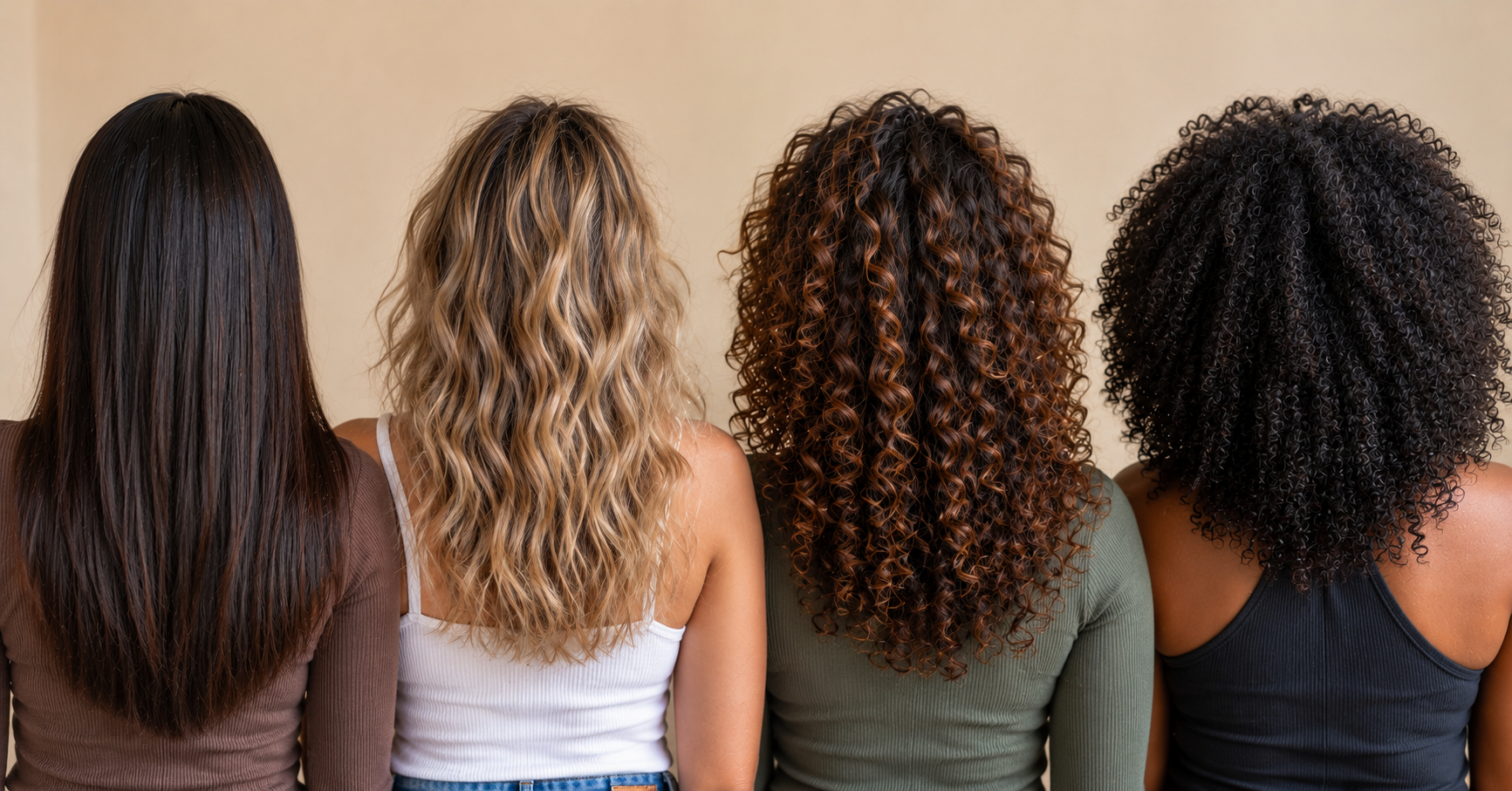
The system sorts hair into four families by the shape a strand takes on its own, judged on clean, product free, air dried hair. Each family splits into A, B, and C, where A is the loosest version of that shape and C is the tightest.
Type 1: Straight
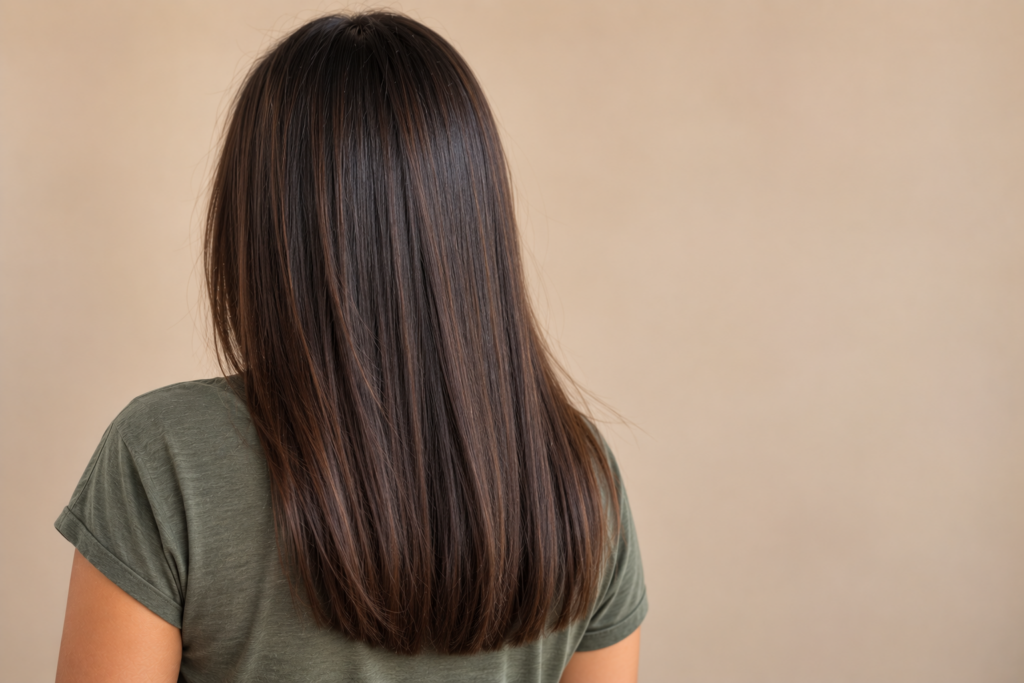
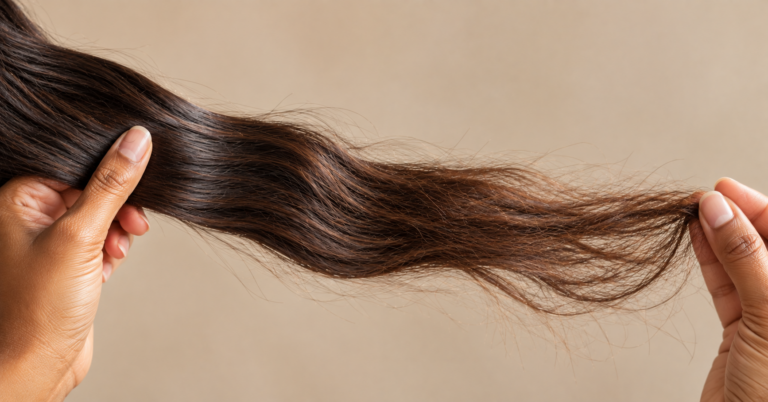
- 1A: pin straight and fine, with no bend at all. Resists holding a curl because there is no texture to build on.
- 1B: straight with noticeably more body and a medium strand width.
- 1C: the thickest and coarsest straight hair, often with a slight bend or wave toward the ends.
Type 2: Wavy
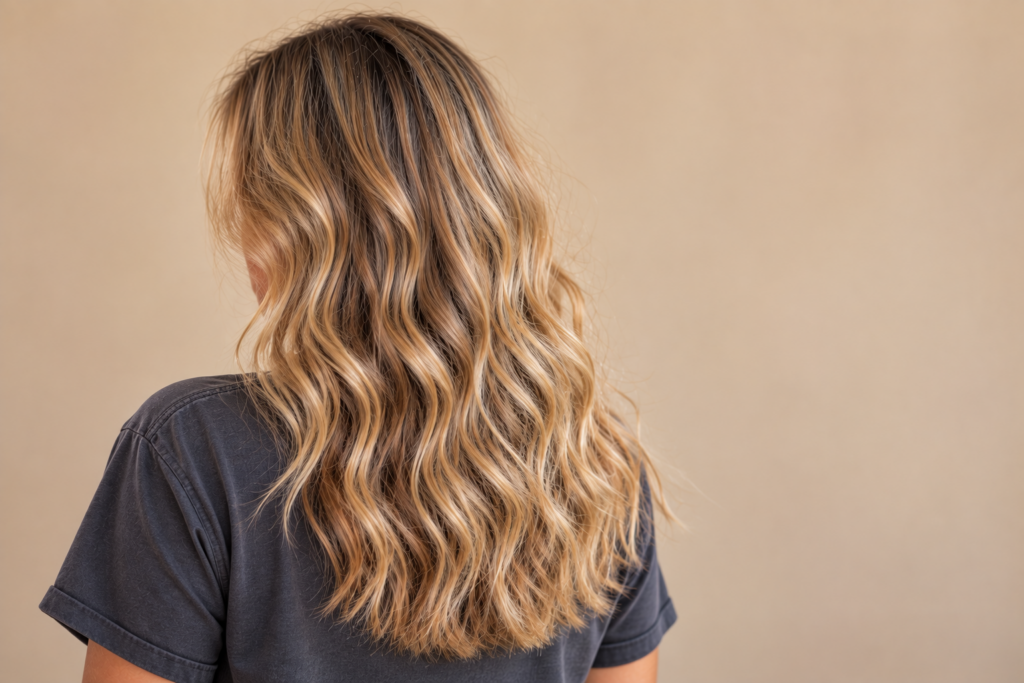
- 2A: a soft, loose bend that mostly shows from the mid lengths down and can look almost straight until it air dries.
- 2B: clearer S shaped waves that start higher up the strand, with flatter roots.
- 2C: the tightest wave, with spirals starting close to the roots. Frequently mistaken for 3A.
Type 3: Curly
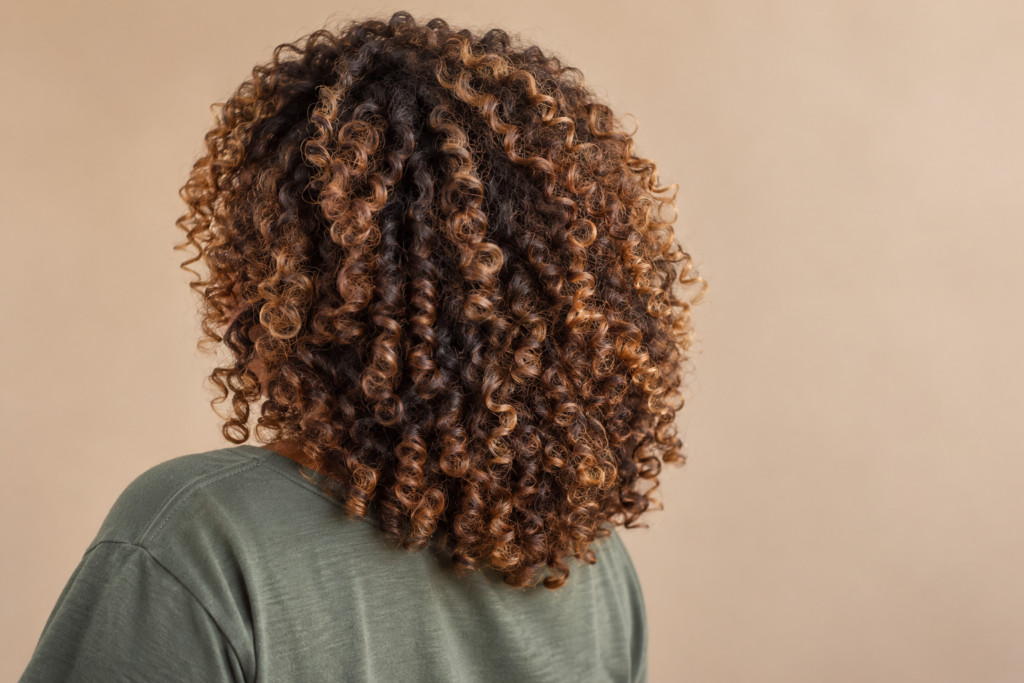
- 3A: loose, defined spirals roughly the width of sidewalk chalk.
- 3B: springier ringlets around the width of a Sharpie marker, with more volume.
- 3C: tight corkscrews about the width of a pencil or a straw, densely packed.
Type 4: Coily
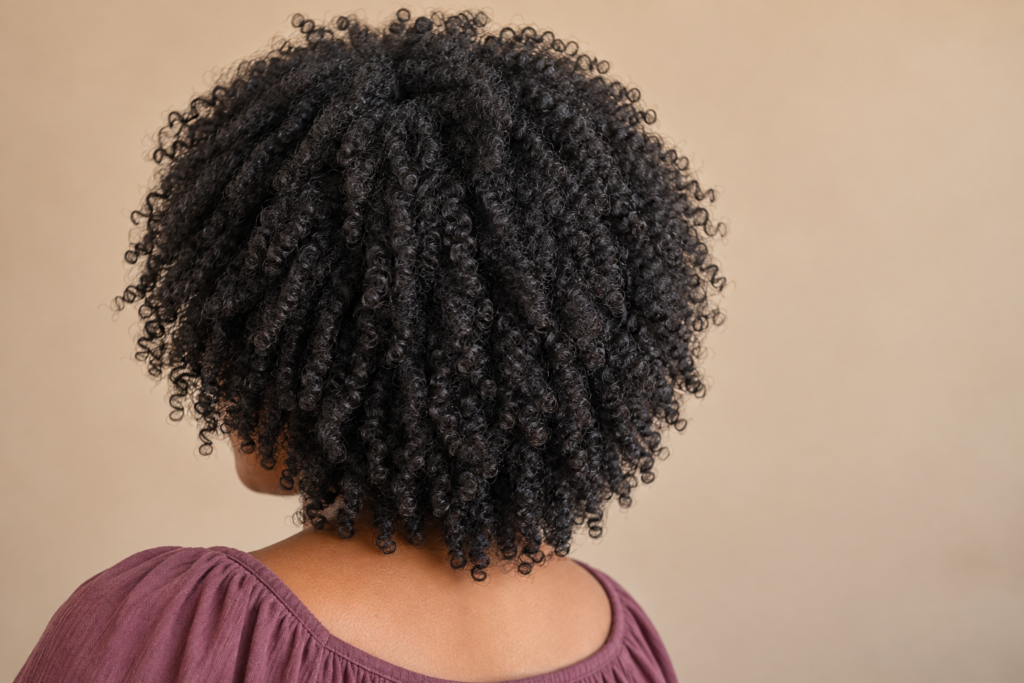
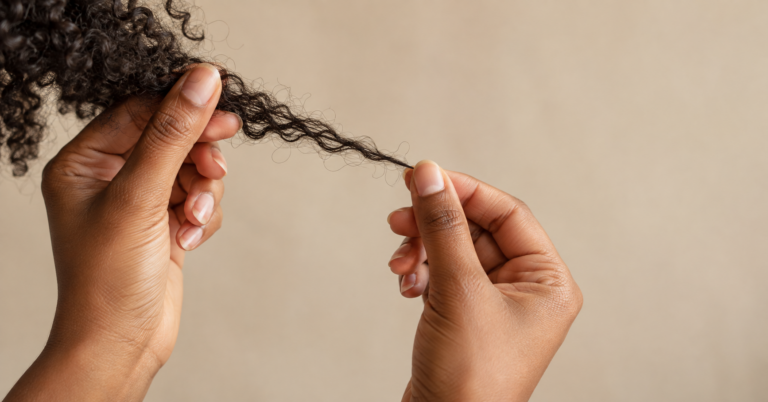
- 4A: small, springy S shaped coils about the width of a crochet needle, with visible definition.
- 4B: coils that bend at sharp Z shaped angles rather than smooth curves, densely packed.
- 4C: the tightest pattern, fine zig zag coils packed closely with the most shrinkage and the least natural definition.
That is the entire logic. The number is the family, the letter is the tightness. Nothing in it refers to your hair’s health, thickness, or needs.
What Is Hair, and What Determines Its Shape?
Before the chart, a shorter answer to a more basic question, since a fair number of readers arrive here asking it directly.
Hair is a filament of dead, keratinized cells growing out of a follicle set into the scalp. It has no nerves and no blood supply once it emerges, which is why cutting it does not hurt. Structurally it has three parts: a protective outer cuticle, a cortex that makes up most of the strand and gives it strength and shape, and in thicker hair, a medulla at the core.[4]
What determines the shape covered in this article, straight through tightly coiled, is decided inside the cortex, in the section below. It is not decided by the cuticle, and it is not the same question as porosity, which is a separate property of the cuticle’s condition rather than of the strand’s shape.
Where the Chart Came From, and Why That Matters
The four family system was created by Andre Walker, Oprah Winfrey’s longtime stylist, in the 1990s, and it was introduced to promote his own line of hair products. It was a marketing framework before it was anything else, and it has never been a scientific classification.
It also shipped incomplete. The original system did not include 3C or 4C. Type 3C was added later by the community at NaturallyCurly.com, whose readers pointed out that hair falling between 3B and 4A had nowhere to sit on the chart. That version, which NaturallyCurly calls Texture Typing, is the one most people are actually looking at when they type themselves, and it is the one I used.
This history explains two of the system’s persistent problems. It implies a hierarchy, with looser patterns treated as the tidy default and tighter coils as the difficult exception, which is a natural consequence of a chart built by someone selling products to the mainstream market of the 1990s. And it was designed to sort people into buying categories, which is why the assumption that your type tells you what to buy feels so intuitive even though it does not follow.
The most useful correction comes from the people who built the version most of us use. NaturallyCurly states plainly that Texture Typing addresses curl pattern only, that other characteristics include porosity, density, width and length, and that in their experience most women have several curl patterns on one head.[10]
That is the whole argument of this article, made by the chart’s own custodians.
How I Used It, and Why It Never Hurt Me
I typed myself 3C off the NaturallyCurly chart, and the description was accurate. I want to be honest about what happened next, because it is not the dramatic story people expect.
I never followed the rules that came with it. By the time I found the chart I was already a few months into the Curly Girl Method and had a routine going, so the label arrived after the routine, not before it. I used 3C as a name for my hair, a way of describing it to other people, and nothing more.
Looking back, that accident is the reason the chart never cost me anything. The people I watched struggle were the ones who found the number first and then went looking for the instruction manual, because there is no instruction manual. There is a shape, and there is shopping.
How to Find Your Type
If you want to type yourself, do it on hair that is clean, free of product, and fully air dried. Wet hair hangs looser than its real pattern, and product can clump hair into a definition it does not naturally have.
- Wash, skip the styling products, and let it dry with as little handling as you can manage.
- Look at one section rather than your whole head at once.
- Decide the shape first: is it straight, a wave that lies fairly flat, a defined spiral, or a springy coil or zig zag?
- Then judge tightness by width. 3A is about the width of sidewalk chalk, 3B a Sharpie, 3C a pencil or a straw, 4A a crochet needle.
- Expect more than one answer.
That last point is not a caveat, it is the norm.
Three Patterns on One Head
When I started my healthy hair journey I had at least three patterns going at once. The front of my hair was the most damaged and read as 3B. My nape was curlier, closer to 3C. Everything in between was some mixture of the two.
I did not treat that as a problem to solve. I called my hair 3C because that was the dominant pattern and got on with it. If you are looking at your own head trying to work out which section is the real one, the answer is that they all are, and the differences between them usually tell you something more interesting than the label does. Mine were telling me exactly where my damage was.
Your Type Can Change, and That Is Usually a Condition Story
This is the part I have lived through, and it is the part almost nobody writing about hair typing has seen firsthand.
Before I started my healthy hair journey I had never seen my hair in a healed state. It had been relaxed, bleached, and flat ironed for years, and what pattern remained was very loose. I typed my hair based on hair that was damaged.
When I stopped the chemicals and the heat, something came back that I did not know was there. I had no idea my hair could be that curly. I started seeing a real difference at six to seven months, and it took a full year to heal completely, which only finished once all the damaged length had been cut off through regular trims.
My pattern did not change. My pattern was always that. What changed was the condition of the hair carrying it. Damaged hair holds a looser, less defined shape, because the structure that produces the curl has been compromised.
So when someone says their curls loosened, or that their type changed after bleaching or years of heat, the honest reading is usually that the hair changed condition rather than that the pattern rewrote itself. Pattern is largely set at the follicle. Hormonal shifts, pregnancy, and some medications can genuinely alter it, and so can chemotherapy. But most reported type changes are damage arriving or damage leaving.
The Science: Why Hair Is Curly at All
Curl is not decided at the surface of the strand. It is decided in the cortex, the middle layer that makes up most of the fiber and carries its strength.[4]
The cortex is built from cells that are not all the same. Researchers distinguish ortho type, meso type, and para type cortical cells, which differ in how their internal keratin filaments are packed and arranged. When these cell types are distributed unevenly around the fiber, with more of one kind gathered on one side, that side behaves differently from the other, the fiber bends, and hair grows curly. The more lopsided the distribution, the tighter the curl.[5][6][7]
This also explains why a strand is not a perfect cylinder. Straight hair is rounder in cross section, and curlier hair is flatter and more elliptical.
And that shape has a real mechanical consequence. Curlier fibers are more prone to breaking, and they break at the bends, where stress concentrates.[8][9] That is worth sitting with. The fragility of coily hair is not a failure of care and it is not a product problem. It is geometry. Which is also why gentle handling does more for tightly coiled hair than any type specific routine ever will.
The Four Things That Actually Decide Your Routine
Two people can both be 3B and need completely different products, and that is not a flaw in how they typed themselves. Curl pattern is one of four independent variables, and it is arguably the least useful of the four for deciding what to put on your hair.
1. Condition
How worn or damaged the outer layer of your hair is. This is what porosity actually tracks, and it sits on a spectrum rather than being a fixed type you were born with. Smooth, intact hair keeps product on the surface. Bleached, colored, heat styled, or simply older hair takes it up quickly and needs more protection. This drives more of your product decisions than your pattern does, and it is the one variable you have real influence over.
2. Density
How many strands you have packed onto your head. High density needs more product and more thorough cleansing at the scalp. Low density is weighed down fast by the same amount.
3. Strand Width
How thick each individual strand is. Fine hair collapses under rich creams no matter how tight its curl. Coarse hair can carry considerably more.
4. The Job in Front of You
Cleansing an oily scalp, adding slip to worn ends, holding a style through humidity, clearing buildup. Pick the product for the job, then judge it by what your hair does, not by whether the bottle mentions your type.
The Product That Failed Me Had Nothing to Do with My Curl Pattern
Here is my concrete example. My hair is medium density, and the Innersense leave in conditioner simply did not work on it. I had to use an enormous amount to get any result at all, because there was too much hair for it, and it did not have enough substance for my texture. It was not the wrong product for 3C hair. It was the wrong product for the amount of hair I have.
Through trial and error I found that heavier curl creams had far more impact. My hair took them up readily and ended up feeling genuinely well conditioned. Nothing about that discovery came from my type. It came from paying attention to density and strand width, and from being willing to be wrong a few times.
What Your Type Is Genuinely Good For
None of this makes the chart useless, and I want to be fair to it.
- It is a shared language. It lets you describe your hair to a stylist, search for people with hair like yours, and find a community, and that has real value.
- It is a rough guide to product weight. Looser patterns flatten under rich formulas and generally prefer lighter ones. Tighter patterns usually tolerate and often want more substance. That is one useful call, and it is the only prediction the chart makes reliably.
- It is a reasonable starting point when you have nothing else to go on.
What it cannot do is tell you what your hair needs. Hold it loosely. It is the first word in the conversation, not the last.
Care That Applies Across All Twelve Types
The fundamentals do not change from 1A to 4C, because the fiber is the same fiber. Only the shape differs, and shape changes where the strain lands rather than what the hair is made of.
- Cleanse your scalp properly and regularly. This is scalp care, and it is the same job on every head.
- Condition after every wash, before you detangle. Conditioners reduce friction between strands, and friction is what causes most breakage.
- Never comb or brush dry, unconditioned hair, and handle wet hair as little as you can, since it is weaker wet.
- Be gentlest with your ends. They are the oldest hair on your head and carry the most accumulated wear.
- Use a heat protectant every single time you use heat.
- Judge products by what your hair does two to four wash days later, not by what the label claims.
Where the shape genuinely changes things is in how vulnerable the fiber is and how easily sebum travels down it. Straight hair distributes its own oils most easily and holds up best mechanically. Every bend adds a stress point and slows that journey. By the time you reach 4C there are many bends per inch, which is why tightly coiled hair benefits most from gentle handling, generous slip, and low manipulation styles. That is not a different science. It is the same science applied to a different shape.
Frequently Asked Questions
Can You Have More Than One Hair Type?
Yes, and most people do. Looser at the crown, tighter at the nape, or a mix throughout is entirely normal. Type yourself by your dominant pattern. If one section behaves very differently from the rest, that difference is often telling you where damage is concentrated.
Does My Hair Type Change?
Your underlying pattern is largely set. What you see can change a great deal, mostly because of condition. Heat, bleach, color, and years of wear all loosen and distort the pattern you actually have. Hormonal changes, pregnancy, some medications, and chemotherapy can change the pattern itself.
Is 2C Wavy or Curly?
It sits right on the border with 3A, and the line between them is genuinely blurry. This is a limitation of sorting a continuous range of shapes into twelve boxes, not a failure on your part.
Does Porosity Matter More Than Hair Type?
For choosing products, usually yes. The condition of your hair, along with density and strand width, drives more of your routine than whether you are a 3B or a 3C.
Why Does Straight Hair Get Left Out of Hair Type Conversations?
Mostly because the chart was popularized inside the curly hair community, where types 2 to 4 were the point. Straight hair has a pattern, damage, density, and strand width like everything else, and 1A, 1B, and 1C behave quite differently from each other.
Should I Buy Products Labelled for My Hair Type?
Only as a rough starting point for weight. A product labelled for 3B tells you it is probably a medium weight formula. It cannot know your density, your strand width, or your hair’s condition, which is most of what determines whether it will work.
What Is Hair, Basically?
A filament of dead, keratin-based cells growing from a follicle in the scalp, made up of an outer cuticle, a cortex that gives it strength and shape, and, in thicker strands, a central medulla.[4] Everything in this article, curl type, porosity, density, is a description of how that basic structure varies from head to head, not a different kind of material.
Where to Go Next
Knowing your type is a fine place to start and a genuinely fun way to find your people. What it cannot do is tell you what your hair needs, and that comes from learning to read your own hair.
I am building a set of guides that teach exactly that, for curly, straight, and gray hair. They are not out yet, but they are coming.
If I could say one thing to someone who typed themselves this morning and is about to go shopping, it is this. Do not take the general advice at face value. Everyone out there sounds the same, and a great deal of it is not based on anyone’s actual experience. You have to know your own hair. You are going to get it wrong a lot before you get it right, and getting it wrong is one step closer to getting it right. Keep going until you find what works for your hair.
Let your hair be your guide.
Verna
References
1. Bernard, B. A. (2003). Hair shape of curly hair. Journal of the American Academy of Dermatology, 48(6 Suppl), S120-S126.
2. De La Mettrie, R., Saint-Leger, D., Loussouarn, G., Garcel, A., Porter, C., & Langaney, A. (2007). Shape variability and classification of human hair: a worldwide approach. Human Biology, 79(3), 265-281.
3. Loussouarn, G., Garcel, A. L., Lozano, I., Collaudin, C., Porter, C., Panhard, S., Saint-Leger, D., & de La Mettrie, R. (2007). Worldwide diversity of hair curliness: a new method of assessment. International Journal of Dermatology, 46, 2-6.
4. Nagase, S., et al. (2008). Characterization of curved hair of Japanese women with reference to internal structures and amino acid composition. Journal of Cosmetic Science, 59(4), 317-332.
5. Bryson, W. G., et al. (2009). Cortical cell types and intermediate filament arrangements correlate with fiber curvature in Japanese human hair. Journal of Structural Biology, 166(1), 46-58.
6. Cloete, E., Khumalo, N. P., & Ngoepe, M. N. (2019). The what, why and how of curly hair: a review. Proceedings of the Royal Society A, 475(2231), 20190516.
7. Ezawa, Y., et al. (2019). Stiffness of human hair correlates with the fractions of cortical cell types. Cosmetics, 6(2), 24.
8. Syed, A. N., & Syed, M. (2021). Curly Hair: Structure, Properties, and Care. Society of Cosmetic Chemists, 75th Annual Meeting, NY, USA.
9. Camacho-Bragado, G., Balooch, G., Dixon-Parks, F., Porter, C., & Bryant, H. (2015). Understanding breakage in curly hair. British Journal of Dermatology, 173, 10-16.
10. NaturallyCurly. Texture Typing. naturallycurly.com/texture-typing