Protein for Damaged Hair: What It Actually Does, and Why Protein Overload Is Not What You Were Told
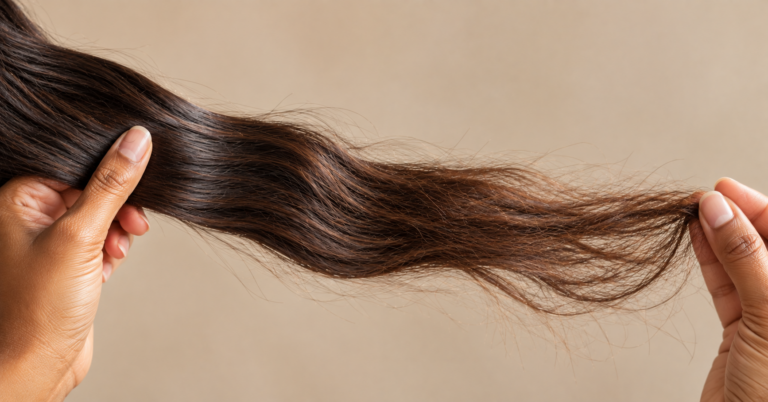
If your hair has ever felt stiff, rough, and straw-like after a run of good products, you have probably been told you have protein overload. You may have been told to strip every trace of protein out of your routine until the balance comes back.
I told people that. I wrote it up, I posted it, and I believed it, because at the time it was the only explanation anyone had offered me.
It was very likely wrong. Not the experience, which was real and which I have photographs of. The explanation.
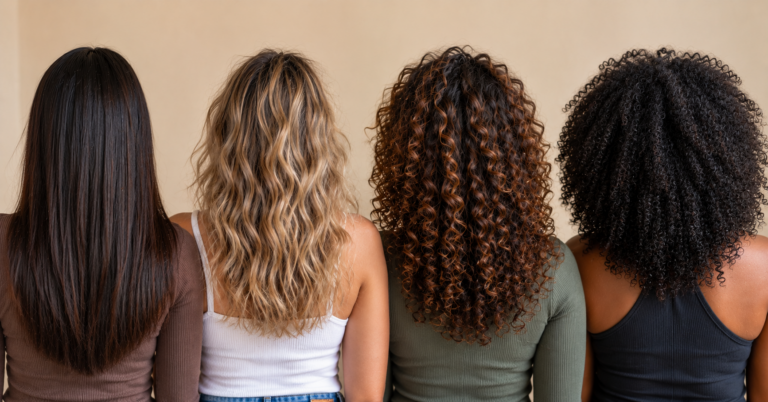
This article covers what protein actually does to hair, why the stiff straw-like feeling happens, why the protein-moisture balance is not a real thing to balance, and what to change on your own head to find out what is really going on. It applies to straight, wavy, curly, and coily hair, because the fiber is the same in all four.
| THE SHORT ANSWER Protein is a conditioning agent. It is one option among several, not a separate food group with an opposite. It mostly sits on the surface of your hair, it improves how the fiber behaves, and it washes off. It does not rebuild the inside of a damaged strand, and no topical product does. The stiff straw-like feeling is real. It is usually a sign that hair is under-conditioned, or that something is built up on the surface. Very often that something is not protein at all. There is a way to find out which, further down, and it costs nothing. |
Before anything else: we were not making it up
The protein overload idea came from a community paying very close attention to its own hair without access to anyone who could explain the mechanism. The observations were sound. Hair does go stiff and straw-like, it does follow a stretch of particular products, and it does resolve when you change something.
Three things went wrong after that, and they are worth naming separately. The vocabulary: we called it an overload of one ingredient against another. The assessment: we tested it by stretching a strand. The conclusion: we decided protein was the culprit and removal was the fix. If you followed that advice you were not gullible. You noticed a real pattern before the tools existed to explain it, which is how this usually goes.
What protein actually does to hair
Hair is made mostly of keratin, a protein. That single fact is doing an enormous amount of marketing work, because it invites an obvious conclusion: hair is made of protein, damage destroys protein, so replacing the protein should repair the damage.
It does not work that way, and the reason is specificity. Hair keratin has a very particular composition and structure. A hydrolysed protein from wheat, soy, silk, or even keratin from another source is not the same material and does not slot into the gaps like a replacement part.[1]
What protein does instead depends almost entirely on the size of the molecule.[2][3]
| Protein size | Where it goes | What it does |
| Large, high molecular weight | Stays on the surface. Cannot enter the cortex. | Adsorbs onto the fiber and forms a film. Smooths the surface, adds shine, reduces friction. Behaves like any other film-forming conditioning agent. |
| Small, hydrolysed, and amino acids | Some can enter the fiber, in limited amounts. | May improve measured strength and elasticity somewhat. Penetration is real but modest, and depends on the specific protein and how well it binds to hair keratin. |
Here is the part that reframes the whole topic. The cortex is what determines your hair’s strength, and the disulfide bonds inside it are what bleach and relaxers break. Those bonds are not accessible to a topical product under normal conditions. Modifying them requires swelling the shaft in an alkaline environment, which is the process that causes the damage in the first place.[1]
So, no protein treatment rebuilds a damaged cortex. What good ones do is genuinely valuable: they deposit on the surface, temporarily fill gaps in the worn cuticle, reduce friction between strands, and measurably improve how the hair combs, feels, and resists breaking during handling.[4][5] That is real work. It is also temporary, and most of it comes off at the next wash.
Which means the honest way to describe protein is this: it is a conditioning agent.
Not a structural repair. Not a food group. Not the opposite of moisture. One category of ingredient, among several, that improves the surface condition of the fiber.
Why protein is a mediocre film former, and why that explains everything
If protein is a conditioning agent, the fair question is how good a one. The answer is that it is competent and rarely the best in the bottle, and this single fact explains most of what gets called protein overload.
Conditioning ingredients get onto hair by two main routes. Cationic agents carry a positive charge and bind electrostatically to hair, which is negatively charged, and more so where it is damaged. That is a strong, targeted attachment, and it is why a conditioner deposits preferentially onto exactly the worn areas that need it.[1][4] Oils and silicones attach because they are water repellent and so is the healthy hair surface, and they spread into a smooth continuous film.
Proteins mostly bind by structural similarity to keratin instead. It works, but it produces a patchier, less even film than a cationic agent or a silicone does. Hydrolyzed proteins in particular are poor film formers.[1] A protein-forward formula therefore leaves hair less smoothly coated than a conditioner built around cationic agents and fatty alcohols would, and less smoothly coated hair feels rougher and stiffer.
Read that again, because it inverts the usual conclusion. The stiffness after a protein-heavy product is not the protein doing too much. It is the protein not doing enough, in a formula that did not bring anything better along with it.
What “responds well to protein” actually looks like
People talk about whether their hair likes protein as though it were a fixed trait. It is more useful to treat it as a question about a specific product, tested properly.
Hair that is benefiting from a protein-containing product tends to feel more resilient rather than softer. Curls hold their shape longer through the day, the hair tolerates detangling with less snapping, and it feels less limp when wet. The improvement shows up in how the hair behaves under handling, not in how plush it feels in the first ten minutes.
Hair that is not benefiting feels stiff, rough, or squeaky, and it does so immediately, not after weeks of accumulation. This is worth knowing, because the accumulation story is a large part of what makes protein overload sound plausible. If a product is going to leave your hair feeling wrong, it usually does it the first time.
And the honest bottom line on choosing: the label cannot tell you. Two products with the same protein at different concentrations, alongside different conditioning agents, perform completely differently. What settles it is your hair, over two to four wash days, with nothing else changing.
Why there is no moisture-protein balance to maintain
The balance model says hair holds a ratio of moisture to protein, that the ratio tips either way, and that your job is to keep it level. It is a tidy picture built on a premise that does not hold: that your products control how much water your hair holds.
They do not. The water content of dry hair is set overwhelmingly by the relative humidity around it, a relationship first mapped in 1931 and confirmed with modern instruments decades later.[6][7] Worse for the model, when researchers compared perceived moisturization against actual water content, the two did not track together.[8] So one side of the scale is not something you control, and more of it is not better. Once that side collapses, the scale goes with it. What replaces it: hair needs conditioning, and it needs less damage. Protein is one way to condition among several.
So what causes the stiff, straw-like feeling?
This is the useful question, and there are four real answers. Notice that only one of them is protein, and it is not the most likely one.
1. The product was mostly protein and short on everything else
This is the most common genuine explanation. Proteins are not especially good film formers compared with other conditioning ingredients. If a product leans heavily on protein and skimps on the cationic agents, fatty alcohols, and oils that do the smoothing work, your hair comes out under-conditioned. It feels stiff and rough because it has not been conditioned properly, not because it has been given too much of something.[1][4]
The distinction sounds pedantic and it is not, because it points at opposite actions. If the problem is too much protein, you remove protein. If the problem is not enough conditioning, removing things makes it worse. You need a better-formulated conditioner, not a stricter ingredient blacklist.
2. Buildup, which may well not be protein
Conditioning agents and styling polymers accumulate over repeated use if they are not being cleansed off, and hair starts to feel heavy, stiff, or coated. The part that matters here is that you cannot tell which ingredient did it by reading a label. Whether something builds up depends on the whole formulation and on how you wash. Silicones, cationic polymers, styling polymers, oils, and your own sebum can all contribute. So blaming protein for buildup is a guess, usually an unexamined one.
3. Mineral deposition from hard water
Badly underdiagnosed, and the likeliest culprit for a lot of people who think they have protein overload, especially with bleached or colour-treated hair. Minerals in hard water deposit onto the fiber, porous hair takes them up far more readily, and the result is a rough, coarse, straw-like feel. On light or colour-treated hair it also shifts the tone toward brassy or coppery.
That colour shift is the diagnostic tell, and it is the most useful sentence in this article. Protein does not change the colour of your hair. If your hair went stiff and also changed tone, you were almost certainly not looking at a protein problem.
4. The hair is simply damaged
Bleached, coloured, relaxed, or heat-damaged hair is rougher, more fragile, and more prone to snapping than intact hair, independently of anything in your routine. It is also weaker when wet, because water acts as a plasticizer inside the fiber and lowers the stress at which it fractures.[10]
If hair breaks easily and feels rough, the most parsimonious explanation is usually that it is damaged. Not that a treatment tipped a balance.
What actually happened to my hair in 2017
I want to walk through my own case, because it contains the exact mistake I now spend my time trying to help people avoid, and because I documented it at the time rather than reconstructing it later.
My hair was bleached and colored, blonde and red over the top of years of damage. It went stiff and straw-like. It felt rough, it broke easily, and it started shedding more. I posted about it in February 2017 and called it protein overload, and I listed all the signs I had been taught: loss of elasticity, texture change, dry brittle hair, breaking with minimal force, hair straighter than usual.
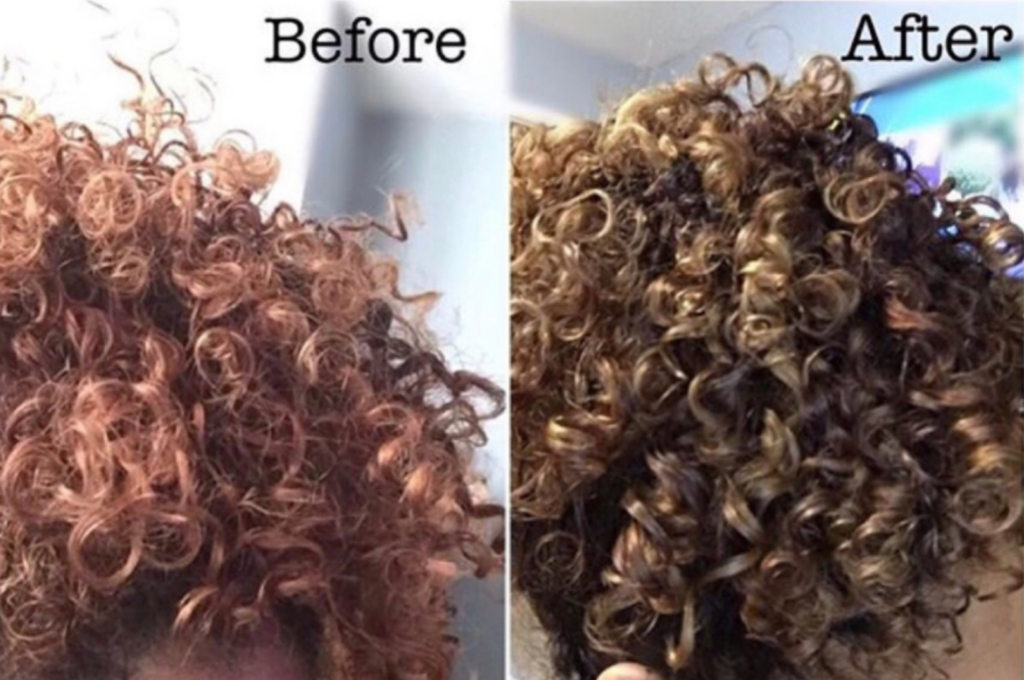
Look at that photograph again, specifically at the colour. My hair did not just change texture. It changed tone, toward brassy and coppery. I did not register that as significant at the time, because I was looking for confirmation of the thing I already believed.
Protein does not change your hair color. Mineral deposition on bleached hair does exactly that, and it produces the rough straw-like feel at the same time. So does general buildup, which dulls the surface and changes how light comes off it.
And here is the part that still bothers me. I fixed it. I clarified with a clarifying shampoo, and I cut every product containing protein out of my routine, and it worked, and I concluded that the protein had been the problem.
I had changed two things at once.
Clarifying removes buildup regardless of what the buildup was made of. Cutting protein removed protein. Both happened in the same week, my hair got better, and I attributed the recovery to the wrong one. I did not have a fair test. I never did, and I never will, because that hair is long gone and I cannot go back and run it properly.
Years later I wrote a guide to hard water and chelating shampoos, and another on why hair feels like straw, and I explained the mechanism correctly in both of them without once connecting it back to 2017. The answer had been sitting in my own work for years before I noticed it applied to me.
That is why the single-variable method is not a nice-to-have on this site. It is the whole method. I have a photograph of what happens without it.
What my hair actually needs now
The color is long gone. It grew out and I cut it off, and my hair is back to its natural black. Nothing is bleached, nothing is dyed, and it has been that way for a while now.
So here is what my routine is concerned with. Conditioning it well, and keeping my scalp clean.
That is genuinely most of it. No protein schedule, no rotation, no balance to hold. Not because protein is bad, and not because I decided it was the villain in 2017 and never let it back in, but because the thing that made my hair complicated was damage, and the damage is not there any more. When there is no bleached, porous, mineral-attracting length left on your head, most of the elaborate decisions stop being decisions.
I find that reassuring rather than deflating, and I want to hand it to you the same way. The more damaged your hair is, the more your products have to do and the more careful you have to be about what is working. As the damage grows out, the routine gets shorter. The goal was never to master a complicated system. It was to need one less.
The separation test: how to find out what is actually going on
If your hair feels stiff and straw-like right now, here is how to find out why, without buying anything and without guessing. It takes about two to four wash days and the entire discipline is changing one thing at a time.
Step one. Clarify, and change nothing else.
Wash once with a clarifying shampoo. If your water is hard, or your hair is colour-treated and has shifted brassy, use a chelating shampoo instead, because ordinary clarifying shampoos are not designed to lift minerals. Then follow with your usual conditioner and your usual routine. Do not remove any products. Do not add anything. Do not change your styling.
Then wait, and judge on the next two wash days rather than the first.
If the stiffness resolves, your answer is buildup, and you have learned something more useful than a diagnosis: you have learned your routine needs a regular reset, not a permanent restriction.
Step two, only if step one did not fix it. Change the conditioner.
Now, and only now, look at the product you suspect. If it lists protein high up and very little else in the way of conditioning ingredients, swap it for a richer conditioner that leads with cationic conditioning agents and fatty alcohols. Keep everything else in your routine identical.
If the stiffness resolves, your answer was under-conditioning. Note that this is the opposite conclusion from protein overload, and it points at adding rather than removing.
Step three. If neither worked, it is probably damage.
At which point the useful moves are the unglamorous ones: better conditioning at every wash, less heat, gentler detangling, and time. Damaged length grows out. It does not get rebuilt.
| WHY THE ORDER MATTERS Clarifying first is deliberate. It is the cheapest intervention, it needs nothing new, and it is the one most likely to work. If you cut protein and clarify in the same week and your hair improves, you have learned nothing at all, and you will spend the next two years avoiding an entire category of conditioning ingredient for no reason. I know, because I did. |
How this looks on straight, wavy, curly, and coily hair
The mechanism is identical across all four, because the fiber is the same. What differs is how the problem announces itself and which of the four causes is most likely.
Straight hair
Stiffness and coating tend to show up as limpness, dullness, and hair that will not hold a style, rather than as roughness. Fine straight hair is overloaded most easily by any conditioning agent, so heaviness is common and often misread as a protein problem. Buildup is the first thing to rule out.
Wavy hair
Usually shows up as a pattern that has gone limp or stringy, plus rough-feeling ends. Wavy hair sits in the awkward middle, heavy enough to lose pattern under buildup and fine enough to be under-conditioned by a protein-forward product. Both causes are live, which is why the separation test is worth running properly here.
Curly hair
Announces itself as loss of definition, tangling, and a coarse feel through the lengths. This is where the protein overload idea took hold, and where it does the most damage, because curly hair that is stiff is very often simply under-conditioned. Removing conditioning ingredients makes it worse.
Coily hair
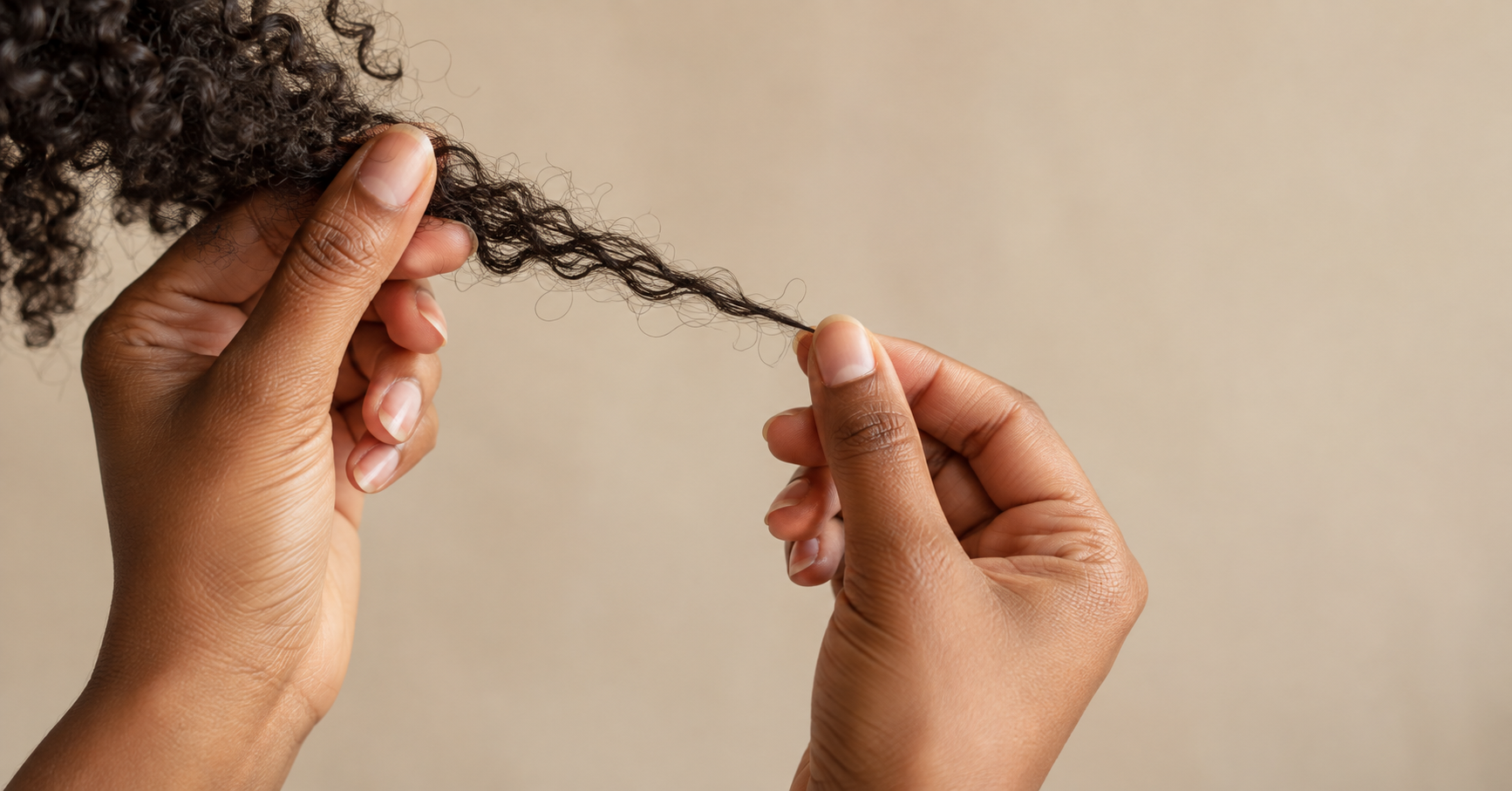
Tends to show as breakage and roughness rather than as a change in pattern. Coily hair has the most bends per inch and therefore the most points of mechanical vulnerability, so cause four, plain accumulated damage, is more often the real answer here than it is on the other three. Conditioning well and handling gently outrank any ingredient decision.
Frequently asked questions
Is protein overload real?
The experience is real. The explanation is not. Hair can certainly feel stiff, rough, and brittle, and it can certainly happen after using particular products. What is not supported is that this is caused by an excess of protein tipping a balance against moisture. The likelier explanations are under-conditioning or buildup, and buildup is frequently not protein at all.
Should I do the strand stretch test?
It will not tell you what you want to know. Stretching a strand and watching whether it snaps tells you the hair is fragile, which you already knew from how it feels. It cannot tell you why it is fragile, and why is the only part that determines what you should do. Run the separation test above instead. It costs the same and it actually distinguishes between the causes.
How often should I use a protein treatment?
There is no schedule that applies to you specifically, and anyone giving you one in weeks is guessing. Protein is a conditioning agent, so the question is not how often but whether your hair responds well to it. Use a product, watch how your hair behaves over two to four wash days, and let that decide. If it helps, keep it. If it makes your hair feel stiff, work through the separation test before concluding the protein was the problem.
Do I need to avoid protein if my hair is low porosity?
No. Porosity is not a hair type and it does not come with an ingredient blacklist. What people call low porosity hair is usually hair in good condition, and hair in good condition still benefits from conditioning. Choose products by how your hair responds, not by a category you were assigned.
Can protein repair my damaged hair?
It can genuinely improve how damaged hair looks, feels, and behaves, by depositing on the surface, filling gaps in the worn cuticle, and reducing friction. It cannot rebuild the cortex, and nothing topical can.[2][3] That is not a reason to skip it. It is a reason to have accurate expectations about what you are buying.
Which protein is best?
The wrong question, unfortunately. Two products with the same protein at different concentrations, in different formulations, alongside different conditioning agents, will perform completely differently on your hair. The label cannot tell you the answer in advance. Only your hair can.
What if my hair genuinely does feel better without protein?
Then use products without protein. Nothing here is an argument for putting an ingredient on your head that your hair does not like. The argument is against the reasoning, not the outcome. If you arrived at a protein-free routine by testing one variable at a time and watching what happened, you have done exactly the right thing. If you arrived there by blacklisting a category after changing four things at once, it is worth checking your work.
Where to go next
Where to go next
The separation test above is the method in miniature. Change one thing, wait, judge, repeat.
I am building a set of guides that apply that same method across a whole routine, for curly, straight, and gray hair. They are not out yet, but they are coming.
Let your hair be your guide,
Verna
References
1. Robbins, C. R. (2012). Chemical and Physical Behavior of Human Hair (5th ed.). Springer.
2. Malinauskyte, E., Shrestha, R., Cornwell, P. A., Gourion-Arsiquaud, S., & Hindley, M. (2021). Penetration of different molecular weight hydrolysed keratins into hair fibres and their effects on the physical properties of textured hair. International Journal of Cosmetic Science, 43(1), 26-34.
3. Cruz, C. F., Azoia, N. G., Matama, T., & Cavaco-Paulo, A. (2017). Peptide-protein interactions within human hair keratins. International Journal of Biological Macromolecules, 101, 805-814.
4. Weiand, E., Rodriguez-Ropero, F., Roiter, Y., Angioletti-Uberti, S., Dini, D., & Ewen, J. P. (2025). Understanding and controlling the friction of human hair. Advances in Colloid and Interface Science, 345, 103580.
5. Neudahl, G. A. (1999). Proteins for conditioning hair and skin. In R. Schueller & P. Romanowski (Eds.), Conditioning Agents for Hair and Skin (pp. 139-166). Taylor & Francis.
6. Chamberlain, N., & Speakman, J. B. (1931). Uber Hysteresiserscheinungen in der Wasseraufnahme des Menschenhaares. Zeitschrift fur Elektrochemie, 37, 374.
7. Evans, T. A. (2012). Adsorption properties of hair. In T. Evans & R. Wickett (Eds.), Practical Modern Hair Science (pp. 333-365). Allured Business Media.
8. Davis, M. G. (2014). Moisture vs. moisturization: understanding the consumer benefit. Presented at the TRI Princeton 5th International Conference on Applied Hair Science.
9. Chikami, S., Maeda, S., Latag, G. V., et al. (2024). Analysis of the hydration water on the surface of human hair using a combination of infrared absorption vibrational spectroscopy and multivariate curve resolution. Surface and Interface Analysis.
10. Yu, Y., Yang, W., Wang, B., & Meyers, M. A. (2017). Structure and mechanical behavior of human hair. Materials Science and Engineering: C, 73, 152-163.