Hair Porosity Guide: Straight, Wavy, Curly & Coily Hair
If your hair always seems dry no matter how much you moisturize it, or if it soaks up products too quickly and still feels rough, porosity may be the reason. Think of hair like a sponge: some sponges are dense and resist water at first, while others soak it up instantly but can’t hold onto it for long. Hair behaves the same way. Porosity determines how easily your strands absorb and retain moisture, ingredients, and treatments, and it influences every hair type: straight, wavy, curly, and coily.
Unlike most surface-level guides, this series blends approachable explanations with the scientific insights of a cosmetic formulator and PhD hair scientist, so you get both clarity and credibility.
This is Part 1 of a three-part series that will help you understand your hair’s porosity, care for it effectively, and build a routine tailored to your needs. Whether you’re searching for a hair porosity chart, trying to find your hair porosity, or curious about building a low porosity hair care routine or high porosity hair regimen, you’re in the right place.
What Is Hair Porosity?
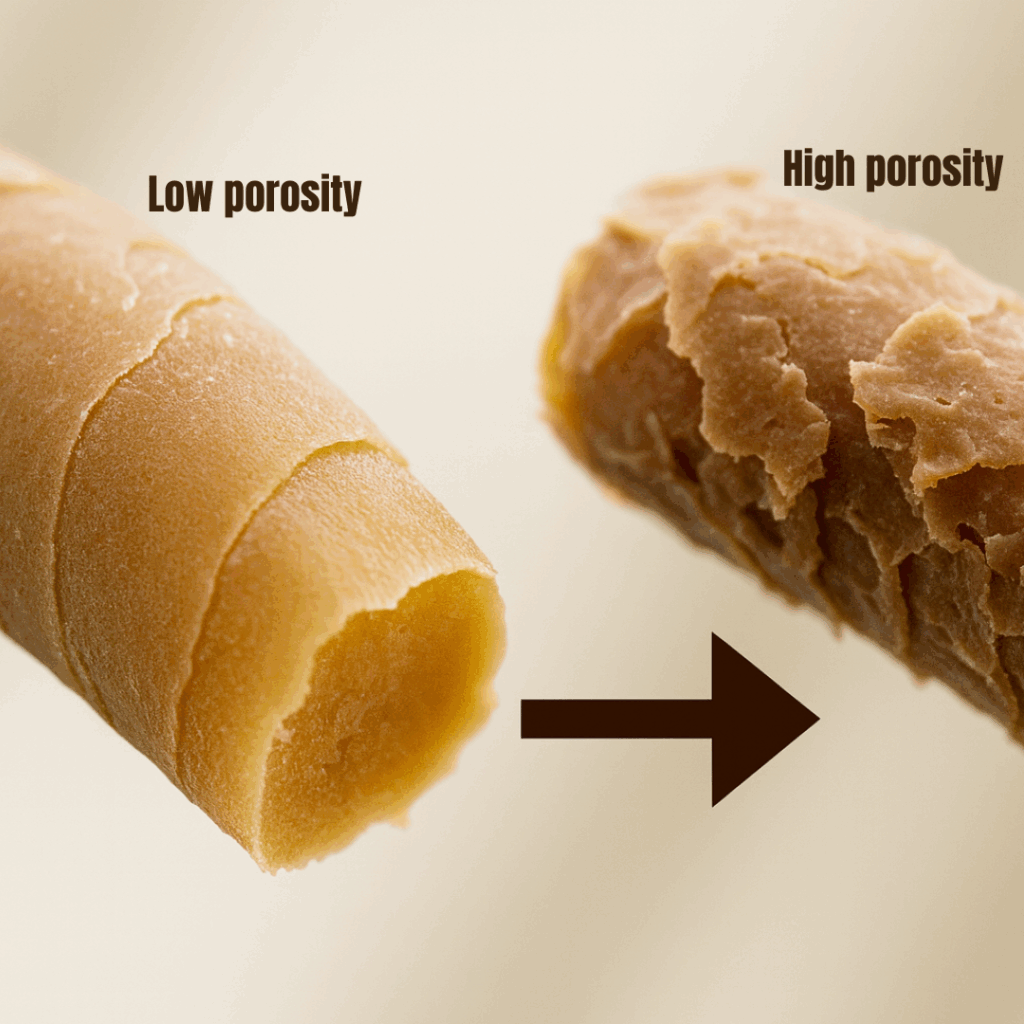
Hair porosity refers to the degree, size, and distribution of pores, microscopic openings, on and within the hair fiber that control how easily water and ingredients enter and exit the strand (1, 2). These pores are primarily determined by the cuticle, the outermost layer of the hair shaft composed of overlapping cells that look like shingles on a roof (3).
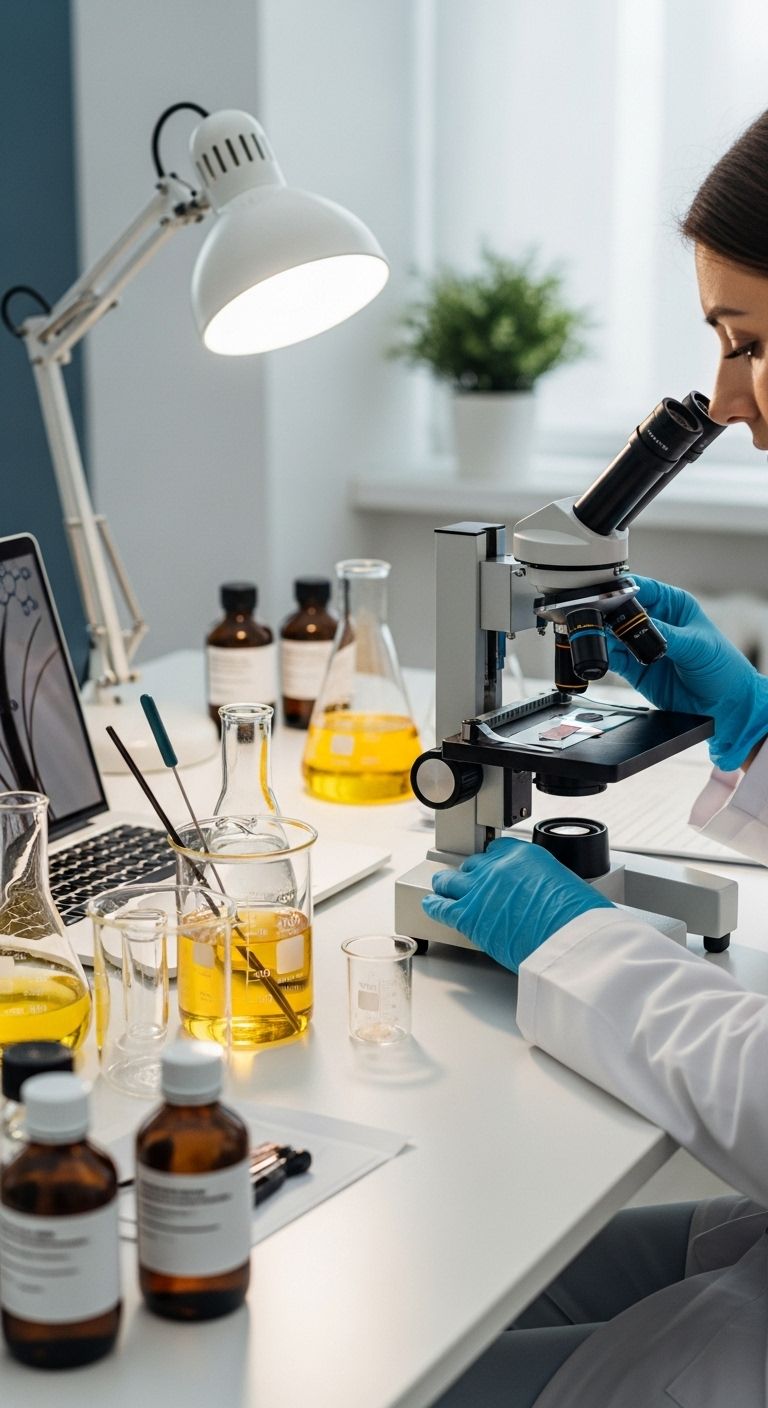
When the cuticle lies smooth and tight, water and products have a harder time getting in. When it’s lifted, fractured, or partially missing, water rushes in and out quickly. Scientists can visualize these differences using electron microscopy and measure porosity through specialized methods such as mercury intrusion porosimeter and thermogravimetric analysis (4, 5).
Porosity isn’t fixed; it exists on a spectrum and can shift due to chemical treatments, heat, environmental exposure, and mechanical wear (2, 6, 7).
Analogy to remember: Low porosity hair is like a raincoat; water slides off at first. High porosity hair is like a well-worn sponge; water rushes in quickly but drains just as fast.
Science Terms Made Simple
Before we go deeper, here are a few key ingredient terms you’ll see throughout this series broken down in plain language:
- Emollients – Think of these as softeners. They smooth the hair’s surface, fill tiny gaps, reduce friction, and make strands feel flexible and touchable.
Examples: Jojoba oil, shea butter, mango butter, baobab oil. - Film Formers – These ingredients act like a lightweight raincoat for your hair. They create a thin, flexible layer around the strand to lock in moisture, reduce frizz, and boost shine.
Examples: Polyquaternium-55, PVP/VA copolymer, hydroxypropyltrimonium honey. - Cationic Conditioners – These are positively charged ingredients that act like magnets to your negatively charged hair. They smooth the cuticle, add slip, and make conditioners “stick” better even after rinsing.
Examples: Behentrimonium methosulfate, cetrimonium chloride. - Occlusives – These are heavier butters or oils that seal in moisture by forming a barrier on the hair’s surface. They’re especially useful for high porosity ends that lose hydration quickly.
Examples: Castor oil, shea butter, mango butter. - Proteins – Hydrolyzed proteins are reinforcers. Some penetrate to strengthen from within, others form a light film to improve structure and elasticity.
Examples: Hydrolyzed wheat protein, keratin, silk amino acids, peptides.
Keep this section in mind as you read Parts 2 and 3; these terms will come up often, and now you’ll know exactly what they mean.
How to Determine Your Hair Porosity
There’s no single definitive at-home test but combining observation with water interaction behavior can give you reliable clues (1, 4). These methods are far more trustworthy than quick gimmicks.
Water Behavior Test
Start with clean, product-free hair. Mist or wet a small section.
If water beads up and lingers, the hair likely has low porosity.
If water soaks in almost instantly, it’s likely high porosity.
If it wets at a moderate pace and retains moisture well, it’s probably medium porosity.
Drying Time Observation
Hair that takes many hours to air-dry often skews low porosity.
Hair that dries rapidly is usually high porosity.
Slip and Product Behavior
Low porosity hair tends to experience buildup, because the compact cuticle resists penetration.
High porosity hair tends to “drink” products quickly but can still feel dry or frizzy afterward because moisture escapes easily.
History and Damage Profile
Bleaching, permanent coloring, relaxing, and frequent heat styling are strong indicators of higher porosity, since these processes disrupt cuticle integrity and increase pore density (8–11).
Many people look for “quick answers” online, searching terms like how to find hair porosity or hair porosity test, but no single trick is foolproof. Consistent observation over time is the most reliable method.
A Note on the Float Test
The popular “strand in water” test is often inaccurate. Oil residues, water temperature, hair density, and surface tension can skew results. It can be used as a rough clue but should never be treated as a definitive test (1, 3).
Porosity Across Hair Types
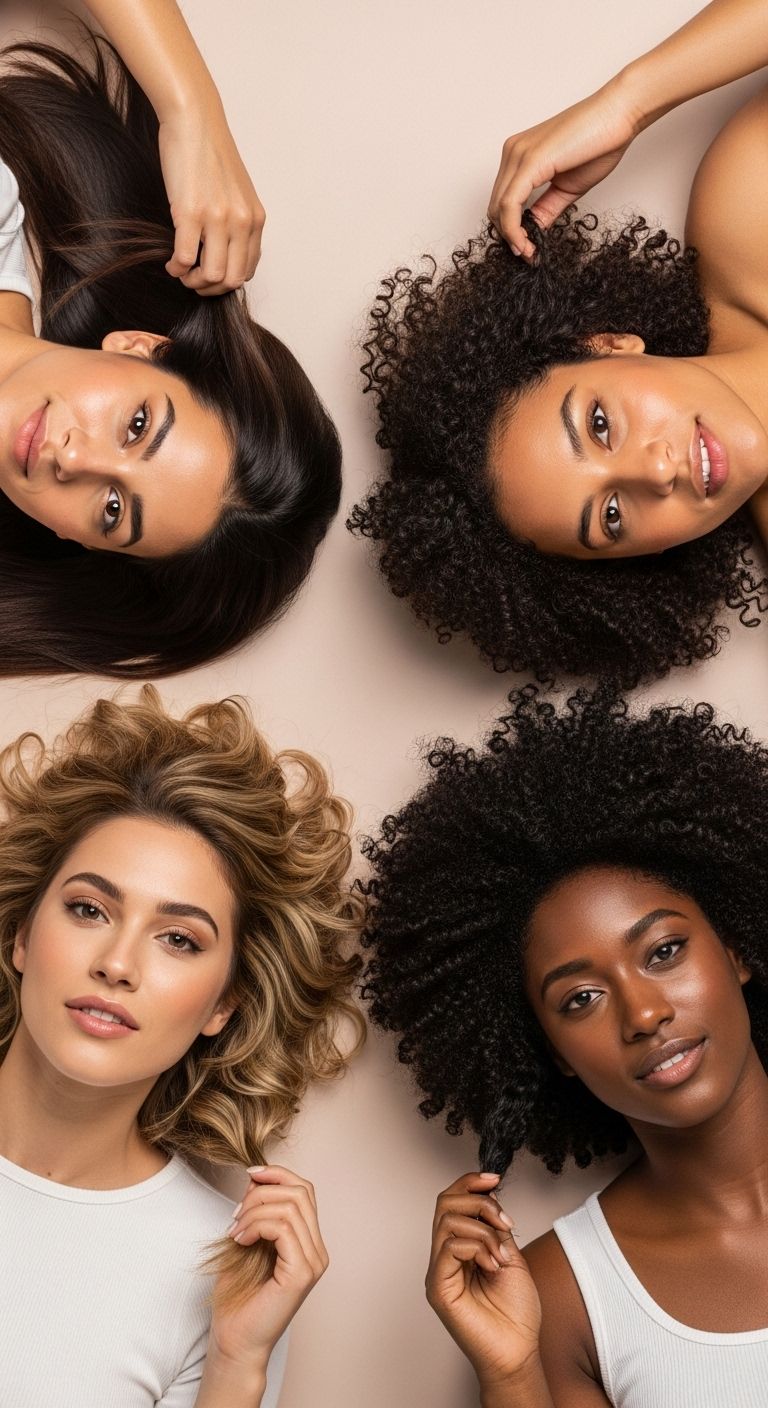
Porosity affects all hair textures, not just curly hair, and it shows up differently depending on the structure of your strands (5, 12).
Straight Hair
Low porosity: Can look sleek but feel stiff or coated when overloaded with product.
High porosity: Tends to frizz at the ends, fade color faster, and feel dry more quickly.
Wavy Hair
Low porosity: Lightweight products are key; heavy formulas can collapse wave patterns.
High porosity: More prone to halo frizz, poofiness, and inconsistent definition. Many wavy-haired people search for wavy hair care routines that address porosity issues without weighing strands down.
Curly Hair
Low porosity: May struggle with moisture penetration; benefits from heat-assisted conditioning and lighter humectants.
High porosity: Absorbs product quickly but loses moisture fast, requiring layered hydration and sealing.
Coily Hair
Low porosity: Tight bends and compact cuticles make penetration more difficult; pre-treatment and gentle heat help.
High porosity: More vulnerable to breakage from friction and dehydration; protective styling and sealing are often essential.
These behavioral differences align with laboratory findings showing that different textures exhibit different moisture uptake and retention patterns based on cuticle compactness, curl geometry, and porosity distribution (5, 12).
What Causes High Porosity Hair?
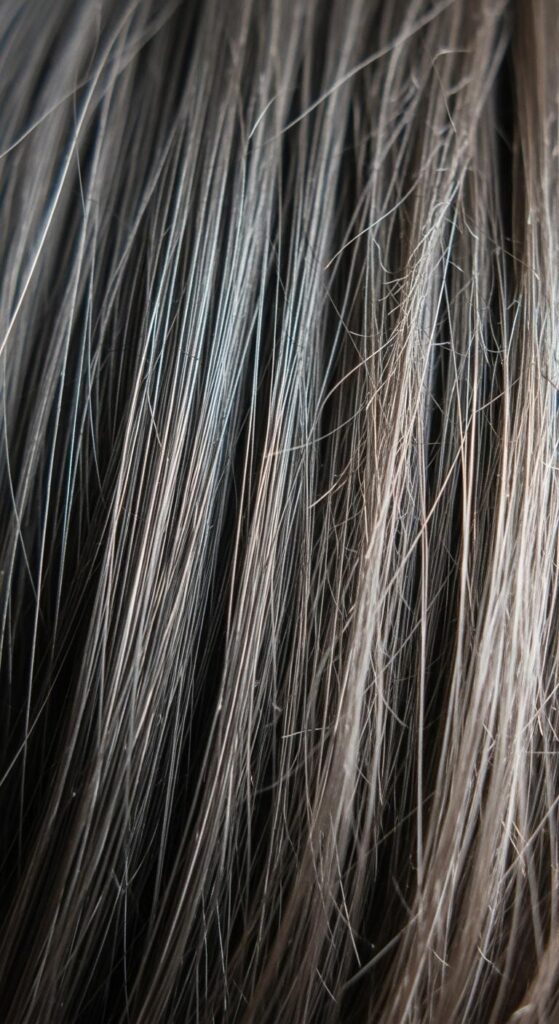
At a microscopic level, high-porosity hair has a dense pore structure, lifted or eroded cuticle scales, and more empty spaces along the shaft (1, 3, 5). These changes can be acquired through external factors or, in some cases, reflect genetic baseline differences.
Chemical Treatments
Bleaching, dyeing, relaxing, and perms all raise porosity by eroding the cuticle, weakening the cortex, and increasing pore density (8, 10, 13). These processes often rely on high pH or oxidative chemistry to “open” the cuticle, which leaves lasting structural effects.
Heat Styling
Excessive or prolonged use of flat irons, curling irons, and blow-dryers can lift and fracture cuticles, leading to elevated porosity (9).
Environmental Stress
UV radiation, wind, saltwater, and chlorine degrade cuticle proteins and lipids, accelerating porosity changes over time (12, 14).
Mechanical Damage
Tight hairstyles, aggressive brushing, rough detangling, and friction from cotton towels or pillowcases physically abrade the cuticle, increasing porosity (11, 15).
Genetics and Aging
Some individuals have naturally higher baseline porosity due to genetic differences in hair structure. Over time, cumulative UV exposure and wear cause hair, especially the ends to become more porous (14, 16).
Characteristics of Each Porosity Type
Understanding how low, medium, and high porosity hair behave is the foundation for customizing your care routine. Each level has a distinct cuticle structure, water interaction profile, and response to products, which affect styling and treatment outcomes across straight, wavy, curly, and coily hair types.
| Porosity Type | Structural Traits | Water Behavior | Product Interaction | Common Challenges |
|---|---|---|---|---|
| Low Porosity | Compact cuticle, fewer pores | Water beads on surface, slow absorption | Buildup-prone, needs help for penetration | Takes longer to dry; resistant to chemical treatments |
| Medium Porosity | Balanced cuticle lift, moderate pores | Steady water uptake and retention | Accepts moisture and actives easily | Can shift toward high with repeated damage |
| High Porosity | Lifted or missing cuticles, dense pores | Rapid absorption, rapid loss | Absorbs fast but struggles to retain | Frizz, roughness, tangling, fast color fade |
How to Improve High Porosity Hair
While you can’t fully “close” damaged cuticles, you can significantly improve strength, moisture retention, and overall feel through targeted care strategies. These approaches are supported by cosmetic science and align with what many seek when searching for high porosity hair care routines or a structured high porosity hair regimen.
1. Reinforce Structure with Proteins
Hydrolyzed proteins fill surface defects, increase tensile strength, and improve elasticity (17, 18). Opt for protein sizes that suit your hair:
Low molecular weight proteins (e.g., hydrolyzed keratin) can penetrate the hair shaft.
High molecular weight proteins form surface films that improve smoothness.
Used judiciously, protein treatments benefit all porosity levels, not just high porosity hair.
2. Use Cationic Conditioning Agents
These ingredients carry a positive charge, allowing them to bind to the negatively charged hair surface. This neutralizes static, smooths the cuticle, and forms a thin conditioning layer that resists rinse-off (19).
Examples: Behentrimonium methosulfate, cetrimonium chloride.
3. Add Film Formers
Film formers create a flexible, breathable barrier around the hair shaft to slow moisture loss and enhance shine. Common options include:
Polyquaterniums (e.g., PQ-7, PQ-10)
Acrylates
Hydroxypropyltrimonium honey
They are particularly useful in humid or dry environments to stabilize moisture levels.
4. Seal Strategically
Layer hydration (water + humectants), follow with conditioners or creams, and seal with oils or light butters suited to your hair density. This slows evaporation, especially critical for porous ends.
5. Reduce Stress
Chemical: Space out coloring, bleaching, or relaxing services.
Thermal: Lower heat temperatures and frequency.
Environmental: Use UV shields, wear hats, or apply protective serums.
6. Trim When Needed
Severely porous ends often can’t be rebuilt. Trimming improves overall appearance and reduces breakage.
Care Routines by Porosity Level
Low Porosity Hair Care Routine
Cleanse: Use gentle shampoos; clarify occasionally to remove buildup.
Condition: Apply gentle heat or steam to lift the cuticle slightly for better penetration.
Treat: Use lightweight humectants and occasional low–molecular weight proteins.
Style: Favor lightweight leave-ins; avoid heavy occlusives that can cause limpness.
Medium Porosity Hair Care Routine
Cleanse: Mild shampoos, clarify as needed.
Condition: Balanced humectants and emollients.
Treat: Alternate moisture and protein masks to maintain elasticity.
Style: Adapt to seasonal changes; midweight creams or gels usually perform well.
High Porosity Hair Regimen
Cleanse: Use mild, cuticle-respecting surfactants.
Condition: Rich, film-forming conditioners with fatty alcohols to smooth and protect.
Treat: Regular hydrolyzed protein masks to reinforce weak zones.
Seal: Hydration → conditioner → cream or oil to retain moisture.
Protect: Minimize heat, shield from UV, and maintain regular trims.
Key Takeaways
Porosity determines how your hair interacts with water and products, not just how it looks.
It’s a structural property, shaped by genetics and environment, and can change over time.
Low, medium, and high porosity hair behave differently and require tailored approaches for cleansing, conditioning, and treatment.
Using cationic conditioners, film formers, and proteins can dramatically improve high porosity hair.
Observing your hair’s behavior over time is more reliable than quick “tests.”
This scientific foundation sets the stage for Part 2, where we’ll decode ingredients, debunk common myths, and tailor care by season.
References
- Hessefort YZ, Holland BT, Cloud RW. True porosity measurement of hair: A new way to study hair damage mechanisms. J Cosmet Sci. 2008;59(4):303–15.
- Dias MFRG. Hair cosmetics: an overview. Int J Trichology. 2015;7(1):2.
- Robbins CR. Chemical and Physical Behavior of Human Hair. 4th ed. Springer; 2002.
- Barba C et al. Water absorption/desorption of human hair and nails. Thermochim Acta. 2010;503–504:33–9.
- Velasco MVR et al. Hair fiber characteristics and methods to evaluate hair physical and mechanical properties. Braz J Pharm Sci. 2009;45(1):153–62.
- Dawber R. Hair: its structure and response to cosmetic preparations. Clin Dermatol. 1996;14(1):105–12.
- Monselise A et al. What ages hair? Int J Womens Dermatol. 2015;1(4):161.
- Jeong MS et al. Significant damage of the skin and hair following hair bleaching. J Dermatol. 2010;37(10):882–7.
- Lee Y et al. Hair shaft damage from heat and drying time of hair dryer. Ann Dermatol. 2011;23(4):455–62.
- Yuen C et al. Evaluation of keratin fibre damages. Fibers and Polymers. 2007;8(4):414–20.
- Kelly SE, Robinson VNE. The effect of grooming on the hair cuticle. J Soc Cosmet Chem. 1982;33:203–15.
- Šebetić K et al. UV damage of the hair. Collegium Antropologicum. 2008;32(2):163–5.
- Imai T. The influence of hair bleach on the ultrastructure of human hair. Okajimas Folia Anat Jpn. 2011;88(1):1–9.
- Dawber R. Cosmetic and medical causes of hair weathering. J Cosmet Dermatol. 2002;1(4):196–201.
- Swift JA. The mechanics of fracture of human hair. Int J Cosmet Sci. 1999;21(4):227–39.
- Trüeb RM. Aging of hair. J Cosmet Dermatol. 2005;4:60–72.
- Neudahl GA. Proteins for conditioning hair and skin. In: Conditioning Agents for Hair and Skin. Taylor & Francis; 1999:139–66.
- Syed AN, Ayoub H. Correlating porosity and tensile strength of chemically modified hair. Cosmetics and Toiletries. 2002;117(11):57–64.
- Dubief C, Mellul M, Loussouarn G, Saint-Léger D. Hair Care Products. In: Bouillon C, Wilkinson J, eds. The Science of Hair Care. 2nd ed. CRC Press; 2005:141–82.