Hair Porosity Deep Dive: Ingredients, Myths, Seasonal Care
Welcome to Part 2 of our Hair Porosity Guide series.
If you landed here first, Part 1 lays the foundation by explaining what porosity is, how to identify your level, and how it behaves across straight, wavy, curly, and coily hair. You can read it here to get the full picture before diving in.
Understanding your hair’s porosity is only half the story. The real magic happens when you match the right ingredients and routines to your porosity level.
In this part, we continue drawing on insights from a PhD hair scientist and cosmetic formulator to decode how specific ingredient categories interact with hair structure.
Whether you’re refining a low porosity hair care routine, optimizing medium porosity hair products, or mastering high porosity hair tips, this guide will help you make sense of labels and build smarter routines year-round.
Ingredient Decoder: Matching Actives to Porosity
Not all ingredients behave the same way across porosity types. The key is understanding how each ingredient category interacts with your cuticle structure and how to layer them strategically for hydration, protection, and strength.
| Ingredient Type | Function | Best For | How It Works |
|---|---|---|---|
| Humectants | Attract and hold water | All porosities (especially medium & high) | Humectants draw moisture into the hair shaft. Lightweight humectants like glycerin, propanediol, and panthenol are small molecules that penetrate easily and work well for low–medium porosity. Heavier humectants like honey or hyaluronic acid are larger molecules that sit more on the surface, creating a moisture cushion, better suited for high porosity or drier climates. |
| Proteins | Strengthen, fill gaps, improve elasticity | High & medium; occasional for low | Hydrolyzed proteins reinforce the hair shaft. Low–molecular weight proteins (e.g., hydrolyzed keratin, silk amino acids) are small enough to penetrate the hair for internal strengthening. Larger proteins (e.g., wheat, collagen) form a surface film to improve smoothness and elasticity. |
| Cationic Conditioning Agents | Neutralize charge, smooth cuticle | All porosities | These positively charged ingredients (e.g., behentrimonium methosulfate, cetrimonium chloride) act like magnets to the hair’s negatively charged surface. They smooth the cuticle, reduce static, and help conditioning ingredients stay put after rinsing. |
| Film Formers | Create a flexible barrier | High & medium porosity | Ingredients like polyquaterniums, acrylates, and honey derivatives create a light, flexible “raincoat” around the hair, slowing moisture loss and enhancing shine and definition. |
| Occlusives / Oils | Seal moisture in | High & medium porosity | Heavier butters and oils (e.g., coconut, jojoba, mango butter) form a hydrophobic barrier on the surface, locking in hydration and protecting the cuticle from environmental stress. |
Matching by Porosity
- Low Porosity
Focus on lightweight humectants and occasional low–molecular weight proteins that can penetrate without sitting on top. Avoid heavy layering of butters or oils that can lead to buildup. - Medium Porosity
Balance humectants and proteins, use cationic conditioners consistently to smooth the cuticle, and adjust film formers and occlusives seasonally for best results. - High Porosity
Incorporate regular protein treatments to reinforce structure.
Use cationic agents (positively charged conditioning ingredients that bond to the hair surface to smooth and reduce static) and film formers (ingredients that create a light, flexible barrier around the hair to lock in moisture and add shine) to smooth and protect.
Then layer humectants → conditioner → occlusive to trap hydration. UV protection is especially important to prevent further damage.
Common Porosity Myths (Science Check)
- “Porosity is fixed.”
Not true. Porosity can vary along the strand and change with treatments, environment, and time. New growth often has lower porosity than older, weathered ends. - “Only curly hair needs porosity care.”
All hair types (straight, wavy, curly, and coily) have porosity. They simply show it differently (e.g., through frizz, limpness, static, or oiliness rather than curl definition alone). - “Protein is only for high porosity.”
Incorrect. The type, dose, and frequency matter more than the label. Low–molecular weight proteins can benefit low and medium porosity hair when used thoughtfully. - “The float test is definitive.”
The float test can be influenced by residues, density, or water temperature. It can offer clues but should never be the only diagnostic method.
Seasonal Hair Care 101 for Porosity
Humidity, temperature, and UV exposure all affect how hair interacts with water and loses moisture. Adjusting your products seasonally can dramatically improve performance.
Summer (High Humidity)
- Challenge: Rapid moisture gain → swelling + frizz
- Strategy: Rely more on film formers and flexible hold products to buffer moisture uptake. Use humectants sparingly.
Winter (Low Humidity)
- Challenge: Dry air → moisture loss, static, brittleness
- Strategy: Increase occlusives and use richer conditioners on porous ends. Humidifiers help stabilize conditions indoors.
Transition Months
- Challenge: Fluctuating humidity & UV exposure shift hair behavior
- Strategy: Track responses and tweak one factor at a time (e.g., switch film formers or protein frequency).
Build Your Plan: What To Do Next
- Identify Your Likely Porosity
Use the observation methods from Part 1 to find your baseline. - Start with the Matching Routine
Begin with the low, medium, or high porosity care outline above. - Layer Strategically
Adjust humectant levels, protein frequency, or film formers one at a time to see clear cause-and-effect. - Track Results for 2–4 Wash Cycles
Porosity-focused changes take time to reveal patterns. Use your Hair Clarity Journal to log what works. - Fine-Tune by Hair Type
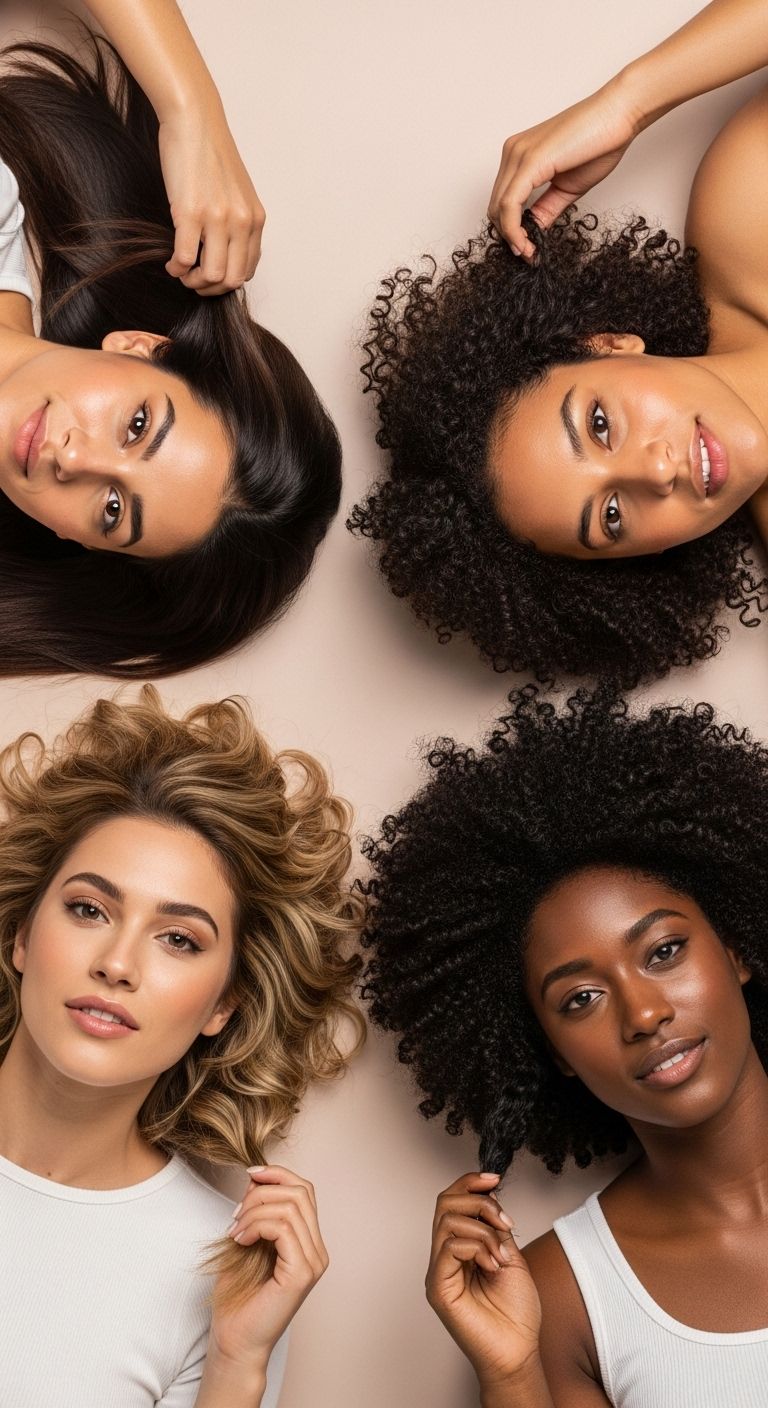
Whether your hair is straight, wavy, curly, or coily, porosity gives you direction, ingredients and seasonal tweaks are your tools.
Key Takeaways
- Ingredient knowledge is essential for building effective porosity-based routines.
- Understand lightweight vs heavyweight humectants, low vs high molecular weight proteins, and cationic agents to make smarter product choices.
- Myth-busting and seasonal strategies elevate your results from guesswork to science-based care.
- Track and tweak gradually as this is how you build a routine that works with your hair, not against it.
References
- Hessefort YZ, Holland BT, Cloud RW. True porosity measurement of hair: A new way to study hair damage mechanisms. J Cosmet Sci. 2008;59(4):303–15.
- Dias MFRG. Hair cosmetics: an overview. Int J Trichology. 2015;7(1):2.
- Robbins CR. Chemical and Physical Behavior of Human Hair. 4th ed. Springer; 2002.
- Barba C et al. Water absorption/desorption of human hair and nails. Thermochim Acta. 2010;503–504:33–9.
- Velasco MVR et al. Hair fiber characteristics and methods to evaluate hair physical and mechanical properties. Braz J Pharm Sci. 2009;45(1):153–62.
- Dawber R. Hair: its structure and response to cosmetic preparations. Clin Dermatol. 1996;14(1):105–12.
- Monselise A et al. What ages hair? Int J Womens Dermatol. 2015;1(4):161.
- Jeong MS et al. Significant damage of the skin and hair following hair bleaching. J Dermatol. 2010;37(10):882–7.
- Lee Y et al. Hair shaft damage from heat and drying time of hair dryer. Ann Dermatol. 2011;23(4):455–62.
- Yuen C et al. Evaluation of keratin fibre damages. Fibers and Polymers. 2007;8(4):414–20.
- Kelly SE, Robinson VNE. The effect of grooming on the hair cuticle. J Soc Cosmet Chem. 1982;33:203–15.
- Šebetić K et al. UV damage of the hair. Collegium Antropologicum. 2008;32(2):163–5.
- Imai T. The influence of hair bleach on the ultrastructure of human hair. Okajimas Folia Anat Jpn. 2011;88(1):1–9.
- Dawber R. Cosmetic and medical causes of hair weathering. J Cosmet Dermatol. 2002;1(4):196–201.
- Swift JA. The mechanics of fracture of human hair. Int J Cosmet Sci. 1999;21(4):227–39.
- Trüeb RM. Aging of hair. J Cosmet Dermatol. 2005;4:60–72.
- Neudahl GA. Proteins for conditioning hair and skin. In: Conditioning Agents for Hair and Skin. Taylor & Francis; 1999:139–66.
- Syed AN, Ayoub H. Correlating porosity and tensile strength of chemically modified hair. Cosmetics and Toiletries. 2002;117(11):57–64.
- Dubief C, Mellul M, Loussouarn G, Saint-Léger D. Hair Care Products. In: Bouillon C, Wilkinson J, eds. The Science of Hair Care. 2nd ed. CRC Press; 2005:141–82.