Proteins for High-Porosity Hair: The Complete Science-Backed Guide
If your hair tangles at the slightest touch, frizzes instantly, or breaks even with gentle handling, the solution may not be more oils; it’s the right proteins. High-porosity hair (straight, wavy, curly, or coily) needs structure, not just moisture.
High-porosity hair’s cuticles are cracked or missing, so moisture escapes rapidly. Proteins function like the grout and rebar that reinforce a damaged wall filling gaps, strengthening bonds, and helping hair hold onto moisture [1,2].
This article is crafted in collaboration with a hair scientist and cosmetic formulator with a Ph.D. in Chemistry, ensuring every insight is rooted in rigorous science. By the end, you’ll finally understand proteins and exactly how to use them.
Why Proteins Matter for High-Porosity Hair
On a microscopic level, proteins mimic keratin, the main structural protein of hair [3]. Hydrolyzed forms can attach to weak sites along the strand and hold water molecules through hydrogen bonding [4,5]. The results are:
- Less breakage
- Improved elasticity
- Better moisture retention
- A smoother, shinier cuticle
Without proteins, high-porosity hair struggles to stay hydrated, no matter how much conditioner you use.
Types of Proteins & Related Ingredients
Not all proteins act the same, molecular weight matters [6].
- Large proteins (film-formers): Collagen, oat protein. Coat the surface to reduce frizz and add shine.
- Medium proteins (cuticle repairers): Wheat, soy. Bind to damaged cuticles and reduce porosity.
- Small proteins/amino acids (penetrators): Hydrolyzed keratin, silk amino acids, arginine. Enter the cortex to reinforce from within.
- Peptides: Short amino acid chains that can signal repair or strengthen the cuticle [7].
- Extracts: Plant proteins (pea peptides, quinoa) act as natural film-formers and strengthening agents [8].
Ingredient glossary breakdown:
- Hydrolyzed Keratin: Deep repair, elasticity restoration.
- Silk Amino Acids: Very small, add softness and flexibility [9].
- Wheat Protein: Medium size, improves curl/wave retention.
- Pea Peptides: Plant-derived, coat and strengthen [8].
Signs Your Hair Needs Protein
- Mushy, gummy feeling when wet
- Snaps easily when brushed
- Curls/waves collapse, won’t hold shape
- Persistent frizz despite conditioning
Analogy: Like building a sandcastle with soggy sand; it collapses without reinforcement.
Protein Overload vs. Moisture Overload
Balance is key [10,11].
| Condition | Feels Like | What It Needs |
|---|---|---|
| Protein Overload | Stiff, straw-like, brittle | Moisture (hydrating masks) |
| Moisture Overload | Limp, mushy, won’t hold shape | Protein (strengthening) |
How Often Should You Use Protein?
- Light proteins (leave-ins, conditioners): 1–2× per week [12]
- Moderate (masks): every 2–4 weeks
- Strong reconstructors: every 6–8 weeks (for severe damage only)
Think of it like gym training—light sessions build consistency, heavy sessions rebuild structure.
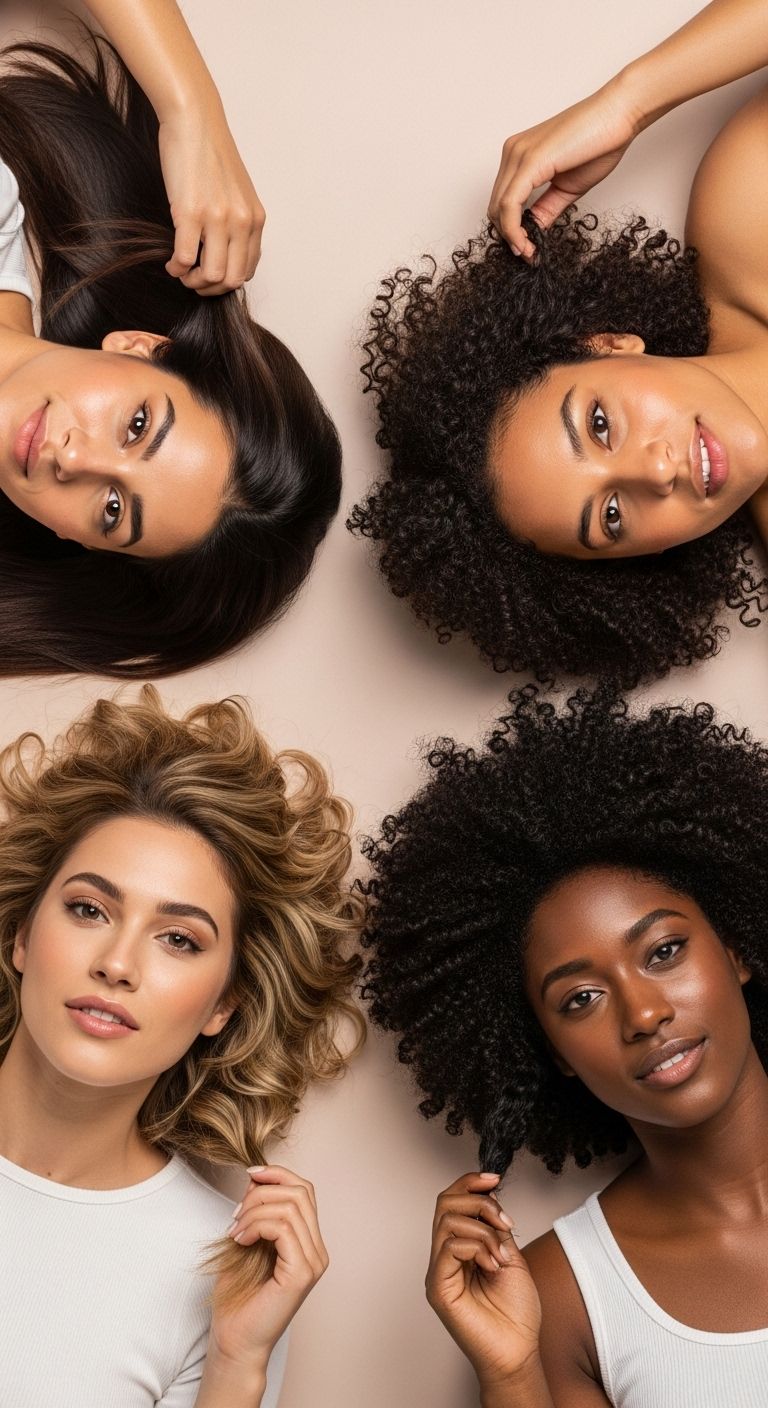
Protein by Hair Type
Straight hair – Often fine, so needs lightweight proteins that won’t cause stiffness. Best choices: silk amino acids, hydrolyzed collagen, keratin sprays.
- Examples:
- It’s a 10 Miracle Leave-In Plus Keratin (light spray, daily use)
- CHI Keratin Leave-In Reconstructor (lightweight, adds strength without heaviness)
- Joico K-Pak Liquid Reconstructor (keratin-based, spray form for fine/straight strands)
Wavy hair – Medium proteins like wheat or soy help waves resist collapse.
- Examples: SheaMoisture Wheat Protein Conditioner, Briogeo Don’t Despair, Repair! Mask.
Curly hair – Hydrolyzed keratin masks restore bounce.
- Examples: Aphogee Keratin 2-Minute Reconstructor, Mielle Babassu & Mint Deep Conditioner.
Coily hair – Rich keratin + butter blends for elasticity.
- Examples: SheaMoisture Strengthen & Restore Masque, Camille Rose Algae Renew Deep Conditioner.
References
- Barba, C.; Méndez, S.; Martí, M.; Parra, J.; Coderch, L., Thermochimica Acta 2009.
- Barba, C.; Martí, M.; Manich, A.; Carilla, J.; Parra, J.; Coderch, L., Thermochimica Acta 2010.
- Robbins, C.R., Chemical and Physical Behavior of Human Hair, 5th Ed. Springer, 2012.
- Teglia, A.; Secchi, G., COSMETIC SCIENCE AND TECHNOLOGY SERIES 1999.
- Cruz, C. F.; Azoia, N. G.; Matamá, T.; Cavaco-Paulo, A., Int J Biol Macromol 2017.
- SYED, A. N.; AYOUB, H., Cosmetics and Toiletries 2002.
- Lodén, M., Journal of Cosmetic Science 2003.
- Typology, “Pea Peptides in Hair Care,” 2023.
- Wikipedia, “Silk Amino Acids.”
- Draelos, Z.D., Dermatologic Therapy 2007.
- Robbins, C.R., Int J Cosmetic Sci 2001.
- Kajiyama, S., et al., Cosmetics 2018.