How to Know Your Hair Type (And Why It Matters More Than You Think)
Understanding your hair type is the first step toward building a successful hair care routine. Your hair type directly affects how you care for your hair, from the products you use to the methods you apply.
Whether you’re dealing with frizz, dryness, or lack of volume, understanding your hair’s unique texture and structure will help you choose the right products and treatments. This post will explore the science of hair types and offer you practical tips to help you care for your hair in the best way possible.
In collaboration with my friend, a hair scientist with a PhD in Cosmetic Chemistry, we’ve carefully crafted this guide based on the latest research to help you understand your hair better and build a routine that suits your unique needs.
Introduction
Knowing your hair type is essential for unlocking the full potential of your hair care routine. It’s not just about how your hair looks; it’s about understanding how your hair behaves. Once you know your hair type, you’ll be able to choose the right products, techniques, and treatments to give it the love and care it needs.
In this blog, we’ll break down the science of hair types, from straight to coily, and show you how to manage your hair’s specific needs.
What Is Hair, Really?
Hair is more than just a physical feature. It’s an essential part of your identity and style.[1] It’s a natural protein fiber that covers the scalp, originating from specialized follicle cells beneath the scalp’s surface.
Hair plays an important role in protecting the scalp from environmental factors, such as temperature changes, and provides insulation for the head.
Structurally, hair is made of keratin, a tough protein that provides strength and elasticity. Nature has designed it to cover the human head scalp providing essential insulation to the inner head components against thermal changes in the surroundings. [2,3]
The Anatomy of Hair: Understanding Its Structure
Hair fibers are made up of three distinct layers that contribute to the overall properties of the hair:
- Cuticle
The outermost layer of hair, called the cuticle, consists of flat, overlapping cells. These cuticles protect the inner layers of the hair from damage caused by environmental factors, such as heat and pollution. The cuticle also determines the texture, shine, and overall quality of hair. Because it’s exposed to the environment, it’s highly susceptible to damage from styling, weather, and chemical treatments. Importantly, the cuticle contains tiny pores along its layers that allow active cosmetic ingredients and water to penetrate deeply into the hair fiber, enabling effective conditioning and treatment delivery. - Cortex
The cortex is the middle layer and the thickest part of the hair. It contains the majority of the hair’s mass and is responsible for its mechanical strength. The cortex is home to disulfide bonds, which are crucial for the hair’s strength and structure. These sulfur-based bonds are particularly important when it comes to chemical treatments, as they allow the hair to be reshaped. Also, it is the site of action for most chemical processing to reshape hair fibers. [7] - Medulla
The innermost part of the hair, the medulla, is relatively inert and does not contribute much to the hair’s physical and chemical properties.
The Role of Chemical Bonds in Hair Strength
Keratin is a protein polymer that makes up the majority of the hair fiber. It is bonded by ionic, covalent, hydrogen, and other chemical bonds. The disulfide bonds in keratin play a particularly important role in maintaining hair’s strength.
When these bonds are damaged due to factors like heat styling, chemical treatments, or excessive grooming it can result in weakened hair, making it more prone to breakage. Damage to this disulfide bond undermines the tensile strength of hair fiber, making it fragile and vulnerable to break. [8,9]
Understanding Different Hair Types
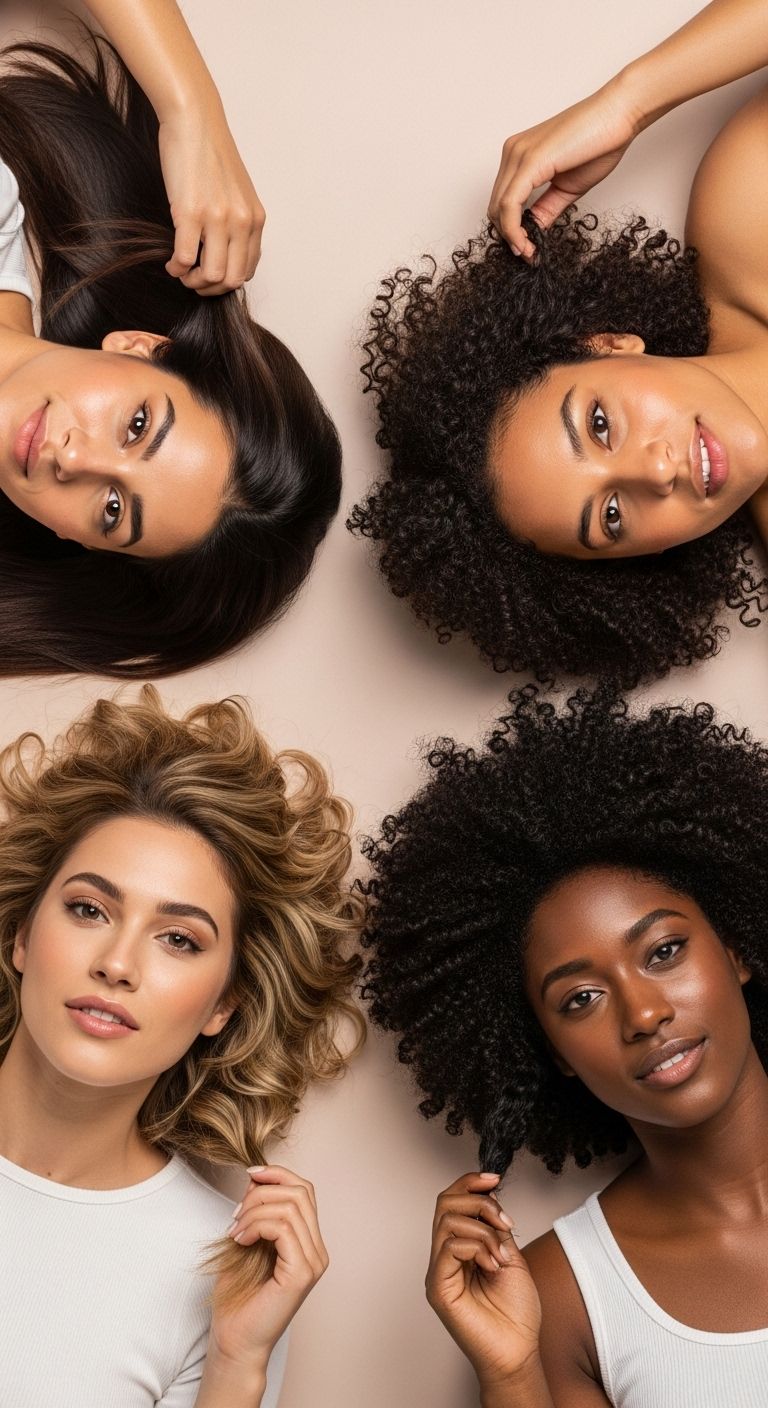
Hair types vary greatly across individuals, and this variation is influenced by genetics and biology. The texture, color, and curl pattern of your hair are all determined by the structure of the hair follicle and the type of hair it produces.
For example, hair from different ethnic backgrounds often has distinct characteristics. Asian hair tends to be straight and fine, while African-American hair is often tightly curled or coiled. Hair from European descent is typically straight to wavy with varying curl patterns.
These variations in hair curl shape, porosity, and texture are due to differences in the morphological units and structural features inside hair shafts. [10,11]
How Hair Type Affects Styling or Routine
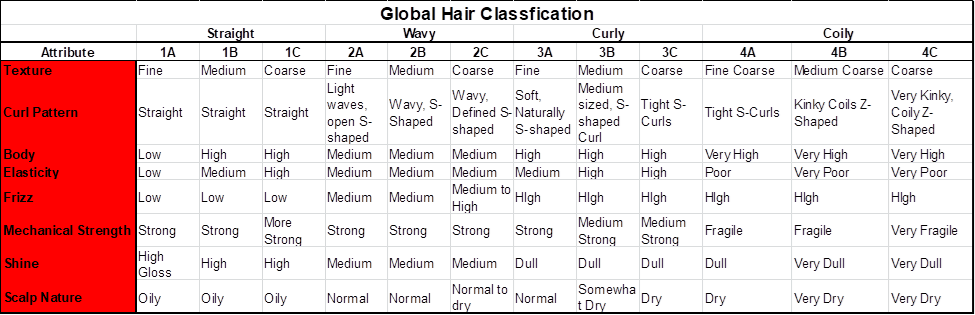
Human hair can be categorized into four major groups and subgroups based on texture and curl pattern. These groups vary widely in diameter, ellipticity, elasticity, moisture and lipid contents, texture, curl pattern, porosity, tensile strength, and other physical properties:
Straight Hair (Type 1A – 1C) Subgroup
Group 1 primarily consists of straight hair fibers commonly found in Asian populations. These hairs range from fine to medium thickness, are smooth, and typically have low body volume. They tend to lie flat and remain straight, which can make adding volume challenging.
Due to their uniform diameter along the shaft, straight hairs generally have strong tensile strength and a high resistance to breakage. The smooth surface also allows for uniform light reflection, resulting in a glossy, shiny appearance.
Wavy Hair (Type 2A – 2C) Subgroup
This group displays a lightly wavy texture characterized by loose “S”-shaped curls. The fiber diameter varies along the shaft, especially at the curvature points where it tends to be thinner.
Wavy hair has moderate elasticity and moisture levels, with a medium tendency to frizz. It maintains relatively good mechanical strength but can require frizz-control products to enhance its natural wave pattern.
Curly Hair (Type 3A – 3C) Subgroup
Curly hair fibers show medium to tight curl tightness, with a higher degree of curl than wavy hair. These hairs typically have an uneven shaft diameter, which contributes to their fragility and susceptibility to breakage.
Curly hair also tends to have lower moisture and lipid content, leading to increased dryness and frizz. Due to the uneven surface, curly hair reflects light poorly, which often results in reduced shine.
Coily Hair (Type 4A – 4C) Subgroup
This group features excessive curliness, often described as coil or kinky hair. These fibers are coarse, highly fragile, and prone to breakage. Coily hair typically has low moisture and lipid content, making the scalp and hair extremely dry.
The hair tends to have high body but can be difficult to detangle when wet or dry. Because of these characteristics, this hair type often requires intensive hydration and formulations rich in moisturizing and emollient agents.
Why Do Hair Types Differ?
Your genetic makeup is the primary factor in determining your hair’s curl pattern, texture, and color. At the microscopic level, the shape and arrangement of cortical cells (ortho-cortical, meso-cortical, and para-cortical) play a significant role in defining whether your hair is straight, wavy, curly, or coily.
The ratio and arrangement of these cells influence the overall shape and tightness of your curls, as well as the physical properties of the hair shaft. The ratio of ortho, meso, and para cells controls the shape of the curl. Their arrangement in the cortical matrix also influences the shape and degree of curliness.
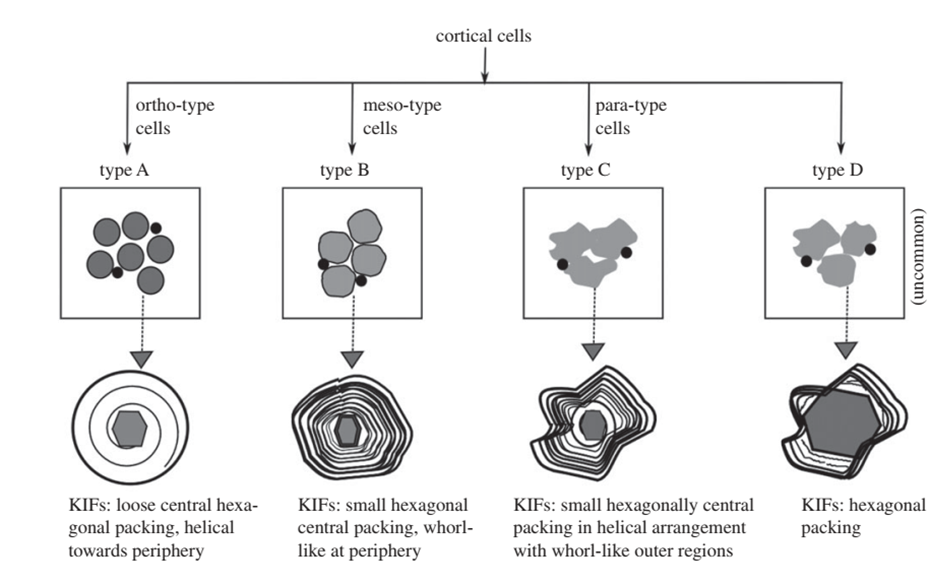
Figure 1: Your hair’s shape, straight, wavy, or curly, is determined by how hair cells develop and organize, guided by your genetics.[12] You can see this in action by comparing strands from different family members: notice how some have looser waves while others have tighter curls?
Can hair type change over time?
Yes, hair type can change due to genetics, hormones, aging, or environmental factors. For instance, hormonal shifts during puberty, pregnancy, or menopause can alter curl pattern, thickness, or density.
Long-term damage from heat, chemicals, or chronic dryness can also change the way hair behaves. While the underlying follicle shape generally remains consistent, surface texture and curl formation may shift, so routines should adapt accordingly.
Basic Care Strategies and Tips to Care for All Hair Types
Keeping your hair healthy and manageable does not need to be complicated. Regardless of your hair type, following a few fundamental steps can make a significant difference in your hair’s overall condition and appearance:
- Maintain Cleanliness and Scalp Health
Regular cleansing removes sebum, dirt, product buildup, and dead skin cells. This supports scalp hygiene and promotes quicker cellular turnover, creating a healthy environment for hair growth. - Use Gentle, Hydrating Shampoo
Wash your hair at least twice a week with a mild shampoo that is gentle on both hair and scalp. Look for shampoos that also provide hydration and conditioning benefits to ensure your hair feels soft and manageable, even when wet. - Apply Rinse-Off Conditioner
Conditioner is essential to detangle wet hair fibers and make combing easier. It smooths the hair cuticle, helping prevent breakage and improving the hair’s appearance. - Dry Hair Carefully
After washing, gently blot excess water with a towel instead of rubbing vigorously. Avoid using a hot hairdryer on wet hair, as this can cause significant damage. Remove as much water as possible before drying with a blow dryer set on a moderate temperature. - Use Leave-In Conditioner Daily
Leave-in conditioners provide continuous hydration and protection throughout the day. They shield hair from environmental stressors such as changes in humidity, temperature, and UV radiation, which can cause protein and lipid oxidation in hair fibers. - Limit Heat Styling and Use Thermal Protection
Excessive use of heated styling tools like flat irons or curling wands can weaken hair fibers. Use these tools sparingly and always apply a thermal protection product beforehand to minimize damage. - Incorporate Deep Conditioning and Fiber Restoration Treatments
Regular deep conditioning treatments can restore lost moisture, improve tensile strength, and smooth the cuticle layer. These therapies help replenish hydration and lubrication, making hair stronger and healthier. - Include Natural Oils in Your Routine
Natural oils act as emollients and protectants for both hair fibers and scalp. Oils such as sesame seed oil provide fatty acids, phytosterols, and antioxidants like vitamin E that help defend hair and scalp against free radical damage.
Putting Knowledge Into Practice
Now that you understand the science behind your hair type and its unique needs, it’s time to apply this knowledge to your daily hair care routine. Tailoring your products and techniques to fit your specific hair texture will help you achieve healthier, more manageable hair that looks and feels its best.
Remember, every person’s hair is unique, and finding what works best for you may take some experimentation. Focus on maintaining a balanced routine that cleanses, hydrates, protects, and nourishes your hair consistently. Embrace this understanding as your foundation for a hair care routine that truly works for you.
References
1. Marsh, J. M.; Gray, J.; Tosti, A. Healthy hair; Springer: 2015.
2. Zviak, C., The Science of Hair Care. Taylor & Francis: 1986.
3. Popescu, C.; Höcker, H., Hair—the most sophisticated biological composite material. Chemical Society Reviews 2007, 36 (8), 1282-1291.
4. Wolfram, L. J.; Lindemann, M., Some observations on the hair cuticle. J Soc Cosmet Chem 1971, 22, 839-850.
5. Kelly, S.; Robinson, V., The effect of grooming on the hair cuticle. Journal of the Society of Cosmetic Chemists 2019, 33, 205-215.
6. Breakspear, S.; Ivanov, D. A.; Noecker, B.; Popescu, C.; Rosenthal, M., Cuticle–Designed by nature for the sake of the hair. International Journal of Cosmetic Science 2022, 44 (3), 343-362.
7. Wolfram, L. J., Human hair: a unique physicochemical composite. Journal of the American Academy of Dermatology 2003, 48 (6), S106-S114.
8. Breakspear, S.; Nöcker, B.; Popescu, C., Chemical bonds and hair behavior—A review. International Journal of Cosmetic Science 2024, 46 (5), 806-814.
9. Parbhu, A. N.; Bryson, W. G.; Lal, R., Disulfide bonds in the outer layer of keratin fibers confer higher mechanical rigidity: correlative nano-indentation and elasticity measurement with an AFM. Biochemistry 1999, 38 (36), 11755-11761.
10. Mettrie, R.; Saint-Léger, D.; Loussouarn, G.; Garcel, A.; Porter, C.; Langaney, A., Shape Variability and Classification of Human Hair: A Worldwide Approach. Human biology 2007, 79, 265-81.
11. Daniels, G.; Fraser, A.; Westgate, G. E., How different is human hair? A critical appraisal of the reported differences in global hair fibre characteristics and properties towards defining a more relevant framework for hair type classification. International Journal of Cosmetic Science 2023, 45 (1), 50-61.
12. Cloete, E.; Khumalo, N. P.; Ngoepe, M. N., The what, why and how of curly hair: a review. Proceedings of the Royal Society A 2019, 475 (2231), 20190516.13. Richena, M.; Harland, D., What causes curly hair? Journal of Cosmetic Science 2022,72, 643-654.